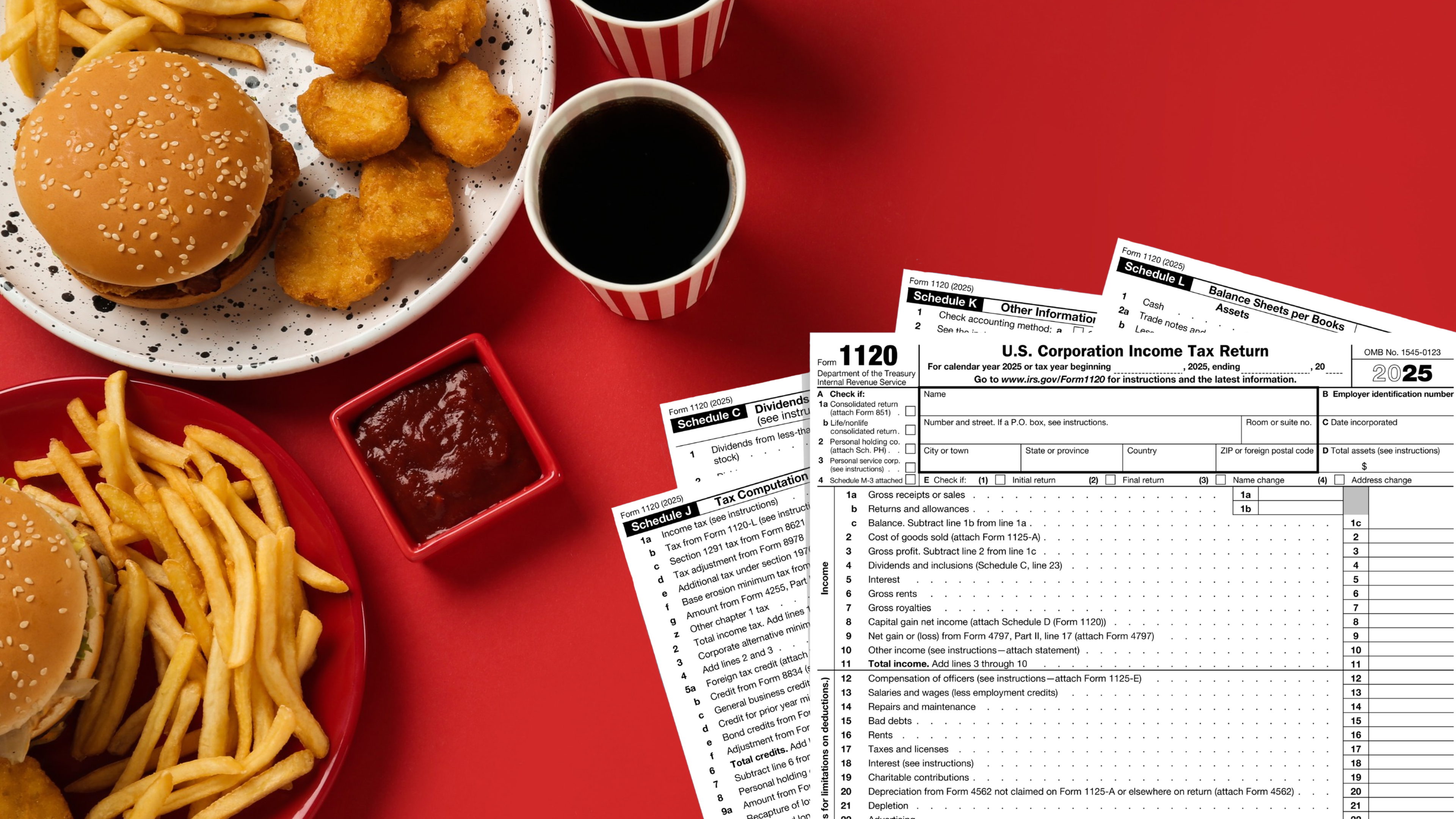
The Predatory Food Economy
Consumer confidence in the U.S. has plummeted during the second Trump Administration, reaching an all-time low earlier this year. Yet the economy, by conventional measures at least, is doing…okay. To be sure, inflation rose to 3.7% in September, and wages aren’t keeping up, but overall economic growth is chugging along at 2.2%, unemployment remains at a low 4.2%, and stocks, owned by 62% of Americans, are still hovering around record highs. Why are consumers so pessimistic?
The best answer yet may come from Goldman Sachs, that “great vampire squid wrapped around the face of humanity, relentlessly jamming its blood funnel into anything that smells like money.” As one of the investment bank’s analysts recently wrote to clients, eroding “trust in public institutions” appears to explain the disconnect between record low consumer sentiment and some of the “rosier” economic indicators. Trust has fallen particularly among young people.
This may come as little surprise to many consumers struggling to navigate a minefield of predatory and deceptive practices. Online scams alone cost Americans an estimated $400 million a day (half of all reported losses involved cryptocurrency). But the problem goes far beyond scams.
Recently, I was surprised to learn how many friends and acquaintances had shared similar abuse at the hands of Uber after discovering mysterious fees from the company on my credit card statement. Since November of 2021, the company has charged tens of millions of unwitting Uber and Uber Eats users for a recurring “subscription” that has lately generated nearly a billion dollars in revenues over just a two-year period. In December of 2025, the Federal Trade Commission sued Uber, citing a litany of complaints demonstrating that the company failed to obtain consent for the subscription charges, misrepresented its services, and prevented customers from cancelling the unwanted subscriptions. Yet Uber has continued to enroll customers in its sham Uber One plan, and to deploy an A.I. chatbot to evade accountability to its customers.
Uber’s bold persistence makes sense from a business perspective, given its market dominance and the second Trump Administration’s vocal commitment to a “lighter-touch approach to disciplining companies.” And Uber’s fraud on the public may even contribute positively to overall “economic growth,” which has a hard time accounting for the value of all that time spent in chatbot doom loops. But make no mistake, Uber’s gain is our collective loss. And the damage from lost trust takes a particularly pernicious effect in the food economy.
This summer offered a grim preview of a food system that has lost consumer trust. In response to the largest cyclosporiasis outbreak in U.S. history, sickening tens of thousands of consumers, the Administration deferred to MAGA Inc. contributor Taylor Farms’ request to delay a recall announcement. Faced with confusing, inconsistent messaging, consumers ditched not just lettuce but fresh produce altogether, with one survey finding that 83% of consumers had changed their buying habits. California lettuce growers plowed under crops as sales of local produce at farmers markets surged.
Given the fallout, developing new technologies to prevent similar outbreaks during next summer’s Cyclospora season would presumably take priority within the federal government. Yet a recent whistleblower complaint shows the opposite. According to staff at the Beltsville Agricultural Research Center (BARC), USDA’s largest and one of its oldest agricultural-research facilities, a hare-brained plan to close the facility and disperse staff around the country has resulted in costly disruptions to food safety research, including research to develop a rapid Cyclospora test. Such a test might have enabled investigators to get a handle on the summer’s outbreak before it exploded into historic proportion. But USDA leadership halted Cyclospora research at BARC, first blocking staff from making “mission-critical credit-card purchases,” and then telling them their project had been defunded retroactively, according to whistleblower testimony. Fortunately, a federal judge recently put USDA’s “reorganization” plan on ice, but a permanent solution will depend on Congress.
Microbiological pathogens are not the only threat. The rise of a predatory food economy goes a long way toward explaining the nation’s epidemic of chronic, diet-related disease. In the absence of meaningful guardrails on chemical ingredient safety, deceptive labeling claims, or food marketing to children, the industry bottom-dwellers gain a competitive advantage. The resulting obesogenic environment preys on the most vulnerable, though it may pose a challenge to even the most privileged among us.
It does not have to be this way. Public policy can establish a level playing field for food companies to compete on what matters: providing safe, affordable and nutritious food, rather than tricking consumers into paying for things they do not want. California’s AB 2244 offers an exciting example, setting up a first-of-its-kind “non ultra-processed” state certification seal for foods. Crucially, the law requires food retailers to dedicate space to certified products, helping to build on school meals and other reforms that are creating healthier food environments.
Vigorous prosecution by state attorneys generals can help restore trust too. Litigation by the states has brought accountability to meatpackers, baby food and infant formula manufacturers, and grocery retailers, to name just a few. These actions are not always perfect. CFA has joined Farm Action and other organizations in opposing the weak settlement proposed in a major egg price-fixing conspiracy case, which was led by federal prosecutors but also involved state AGs. The mere possibility that state AGs bring a lawsuit, however, provides an important check on the Administration’s efforts to hobble federal enforcement and replace the rule of law with a patronage system.
History suggests that unbridled corporate greed will eventually crash the economy. But ample signs already point to the need for change, and for more comprehensive, meaningful measures of our collective welfare. During most Americans’ lifetimes, the economy has either been “good” or “bad,” and few have questioned whether that meant good or bad outcomes for all of us. But that consensus is falling away. Dissatisfaction is growing with the “K-shaped economy” in which a lucky few amass untold riches as the bottom falls out for society’s most vulnerable. As Americans prepare to elect a new Congress, they might ask which of the candidates on the ballot stand to gain from a predatory economy, and which are prepared to take on its most powerful interests.