Demystifying the Fixer-Upper Home: Renovation Mortgages 101

America’s housing stock is older than ever. An estimated shortage of 4 million homes underscores a nationwide affordability crisis. Solutions have long been framed in the same way: we need to build more houses. But this one-dimensional approach leaves out a key tool that could revolutionize both the nation’s unoccupied housing stock and its estimated $198.4 billion in occupied repair needs – expanding access to renovation mortgages.
Renovation or “rehab” mortgages combine a home’s purchase price and renovation costs into one loan, helping homebuyers buy and update a fixer-upper with one mortgage. These products differ from typical mortgages in that they evaluate both the credit worthiness of the borrower and the feasibility of proposed home updates: lenders want to make sure that the expected value of the home after renovations covers the total amount of the mortgage. Fixer-uppers’ lower price range could make them a gateway for affordable homeownership, but in practice many homebuyers find themselves outcompeted by cash buyers and investors in this space. Making renovation mortgages more accessible could unlock this part of our nation’s housing stock once again for would-be homeowners.
CFA conducted interviews with several experts on these products, from mortgage lenders to secondary-market specialists, and analyzed what kinds of renovation mortgages are available to consumers today. These products remain underestimated, underseen, and undersold. This blog demystifies what kind of renovation mortgages are available to consumers today, including their key differences, who could qualify for these products, and some challenges that remain.
Standard Products: Financing a Home Purchase and Big Renovation
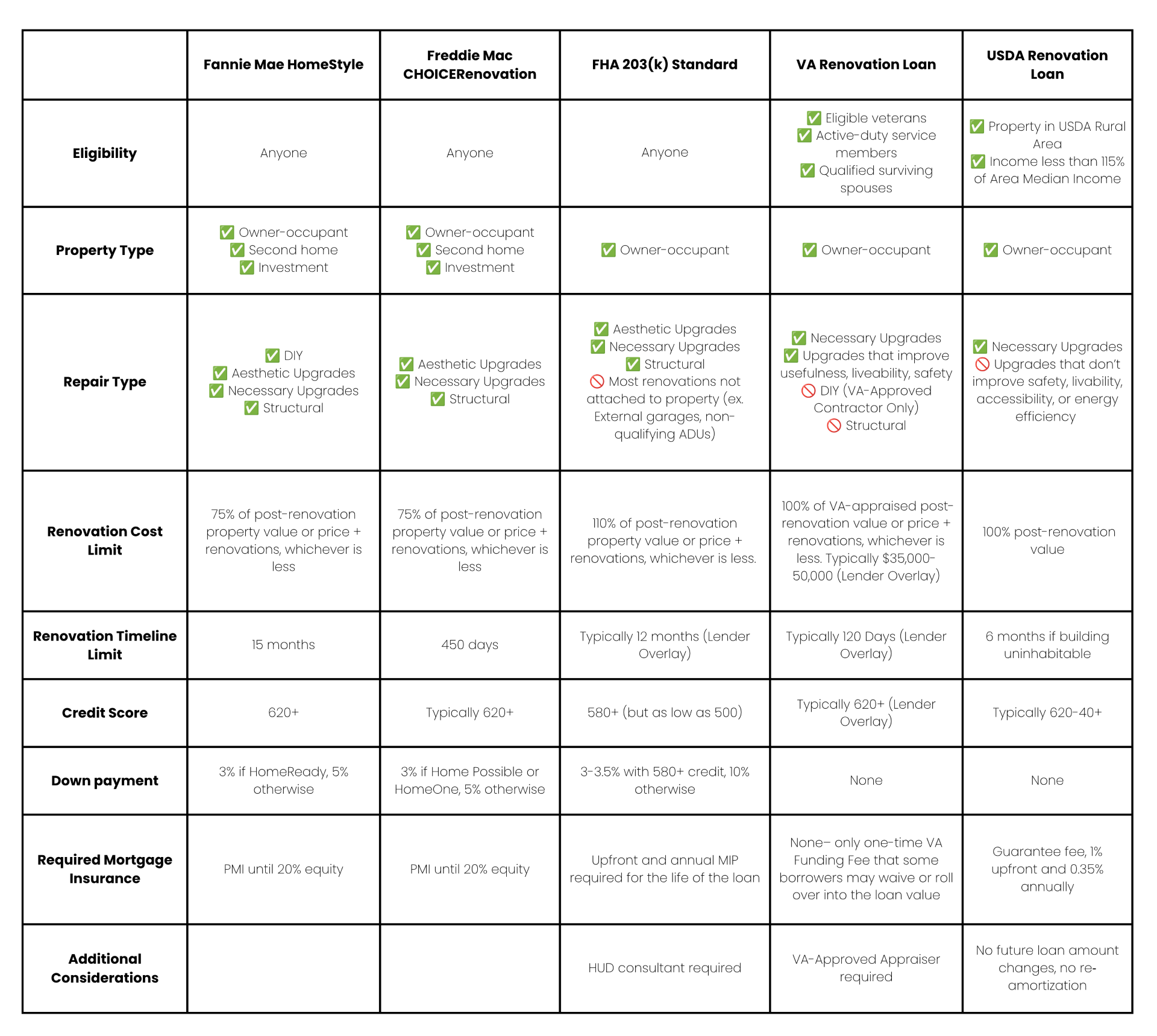
While few consumers may be aware, there is a range of mortgage options on the market if they are looking to buy a home that needs work. A mortgage prevents borrowers from relying on cash or credit card debt – the most common ways that homeowners finance renovations today. With the assistance of a lender, and potentially a consultant, throughout the process, prospective homebuyers can feel more secure that the renovations will be completed on budget and on time.
The FHA 203(k) was the first renovation mortgage of its kind, and remains a popular option thanks to its lower credit score requirements and recent program updates. Consumers should pay particular attention to its unique mortgage insurance requirement (so-called MIP): these insurance fees add upfront cost to FHA loans and will be paid for the life of the loan. Consumers who qualify may benefit from lower overall mortgage costs with other renovation products on the market: either way, CFA always recommends you shop around for your mortgage!
Fannie Mae’s HomeStyle and its closest competitor, Freddie Mac’s CHOICERenovation, are other renovation loans available. While these are secondary market products, they guarantee securitization cash flow for loans that meet their criteria, setting the stage for what lenders will originate. Minor differences between the two loans include Fannie’s allowance for do-it-yourself or self-help work – although lenders ultimately have the power to extend or override these accommodations based on their comfort level (and so in practice, consumers may see little benefit here). Unfortunately, the Enterprises’ conventional requirements, such as minimum credit score or down payment barriers, can be too high for many underserved borrowers. And since certain upgrades, such as adding an Accessory Dwelling Unit (ADU), are not available with any of the other common renovation mortgages on the market, lower-wealth or lower-credit borrowers who need these renovations can be left behind. Even though fixer-upper homes may offer lower base prices, financing discrepancies like these limit their ability to increase homeownership accessibility.
VA and USDA products are designed to support homeownership accessibility for service members, veterans, and those buying homes in rural communities by offering competitive interest rates and eliminating down payment requirements. However, consumers should know that there is often a gap between official program requirements and how lenders offer these products in practice, also called “lender overlays.” While VA/USDA may not impose their own credit score limits, for example, many lenders do not feel comfortable lending such flexible loans to borrowers without high credit. As a result, despite official program guidelines, borrowers who need the more flexible official terms do not always have access to lenders that offer them.
Streamlined Products: Financing a Home Purchase and Smaller Repairs
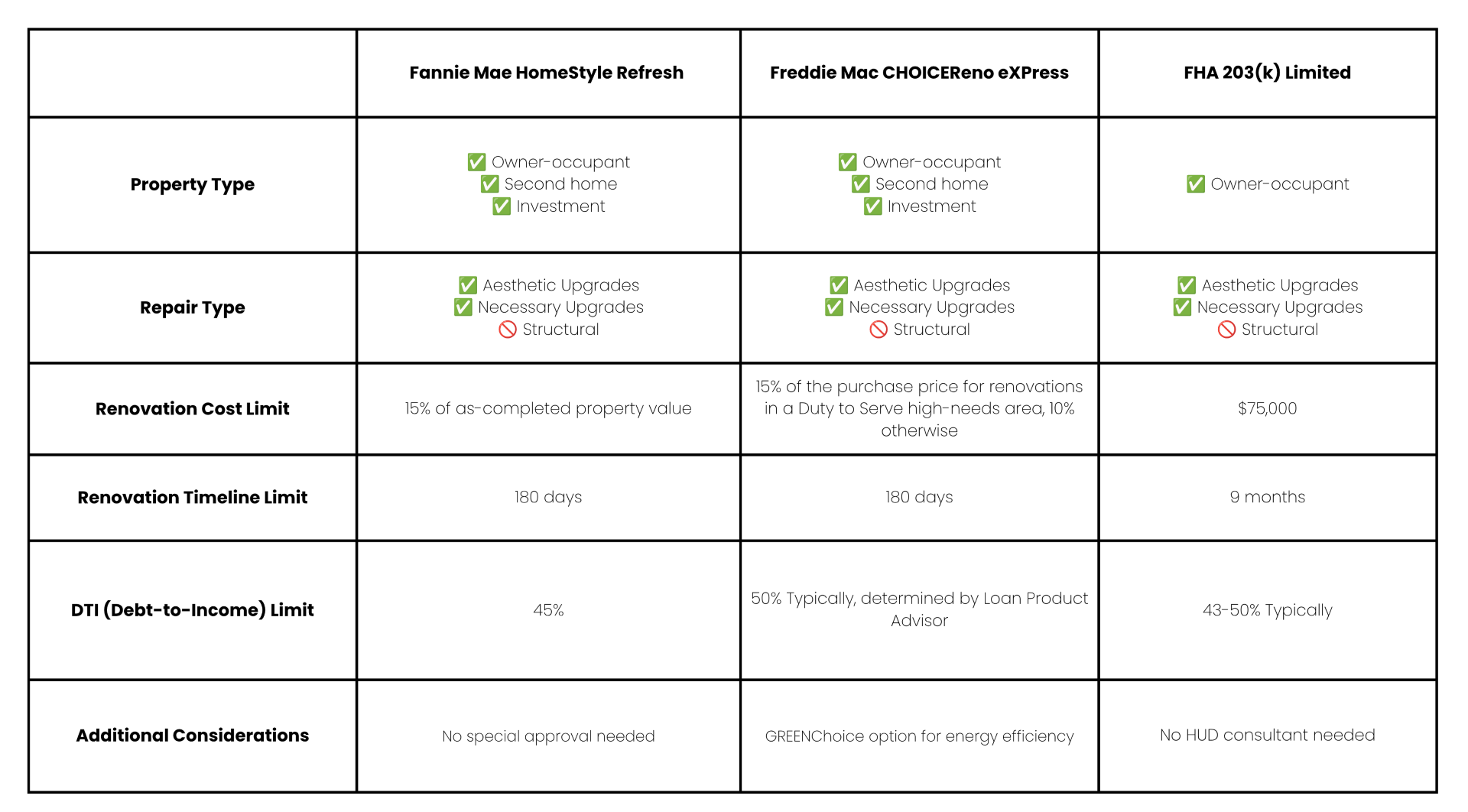
While the loan products described above are meant for larger upgrades and repair projects (often over $75,000 or those that involve structural work), sometimes consumers are looking to finance a smaller scope of repair work as part of their home purchase.
Fannie Mae, Freddie Mac, and the FHA 203(k) program all offer streamlined, miniature versions of their renovation mortgages. These options aim to open up renovation products to lenders who typically cannot accommodate the risks and timelines of large projects. Additionally, by reducing the hurdles needed to get loans closed, borrowers seeking minor repair work may enjoy a speedier process.
However, in practice, lenders report that the “standard” and streamlined versions require similar amounts of paperwork. Some lenders financing conventional projects often opt for Fannie and Freddie’s larger products, providing a financial safety net in case renovations go over time or over budget. Instead of a lower-stress, higher-availability product, these streamlined mortgages seem to be even more niche and less useful than their full-size counterparts.
The 203(k) Limited, however, is the exception. Unlike the standard 203(k) renovation mortgage, this product does not require the use of a HUD consultant: given that HUD consultant availability varies a lot across regions (some states, such as North and South Dakota, do not have a single HUD consultant available) this can make a big difference for consumers seeking to finance a home purchase and a non-structural renovation with a budget below $75,000.
Conclusion
Renovation mortgages remain a much underused product, with consumers often struggling to qualify, to find a house that fits their needs, and to find the appropriate lender and contractors willing to work with them. While CFA continues to examine policy solutions for why these products are underutilized, lenders specialized in the space highlighted “industry stigma” as one major contributing factor. The renovation lending space is niche and origination mistakes (or renovation headaches) can be highly costly for lenders. Stories about loans gone bad can drive away lenders from being willing to offer renovation loans at all. Moreover, most loan officers do not have the specialized knowledge to offer these products: they may steer buyers from renovation mortgages. Unless borrowers push for them, and seek out the right specialized lender, they never even learn about these products in the first place.