Sign up to receive e-mail updates about conferences and events.
49th Annual National Food Policy Conference

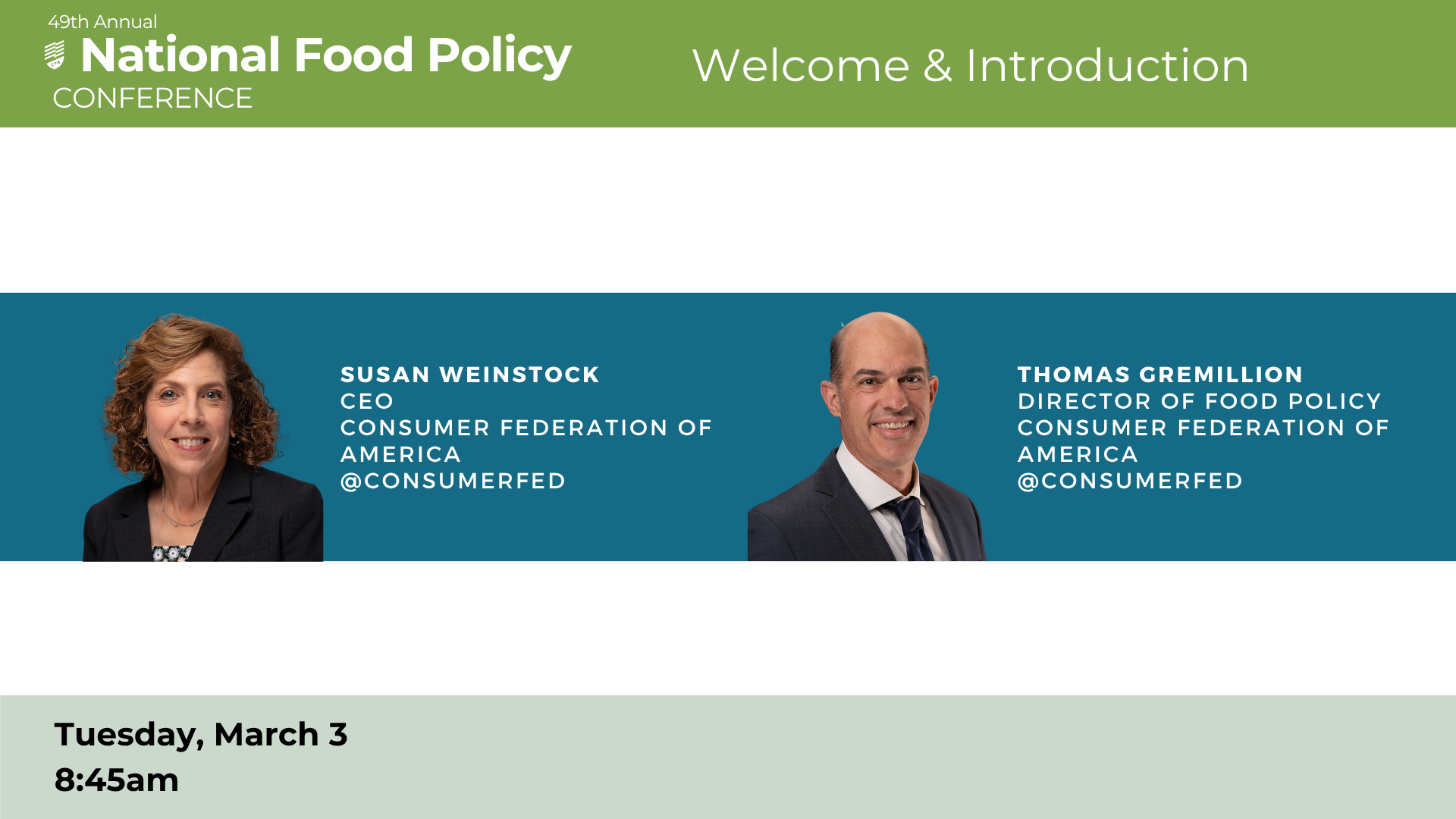
8:45 AM
Welcome & Introduction
Speakers
Susan Weinstock
President & CEO
Consumer Federation of America
Thomas Gremillion
Director of Food Policy
Consumer Federation of America
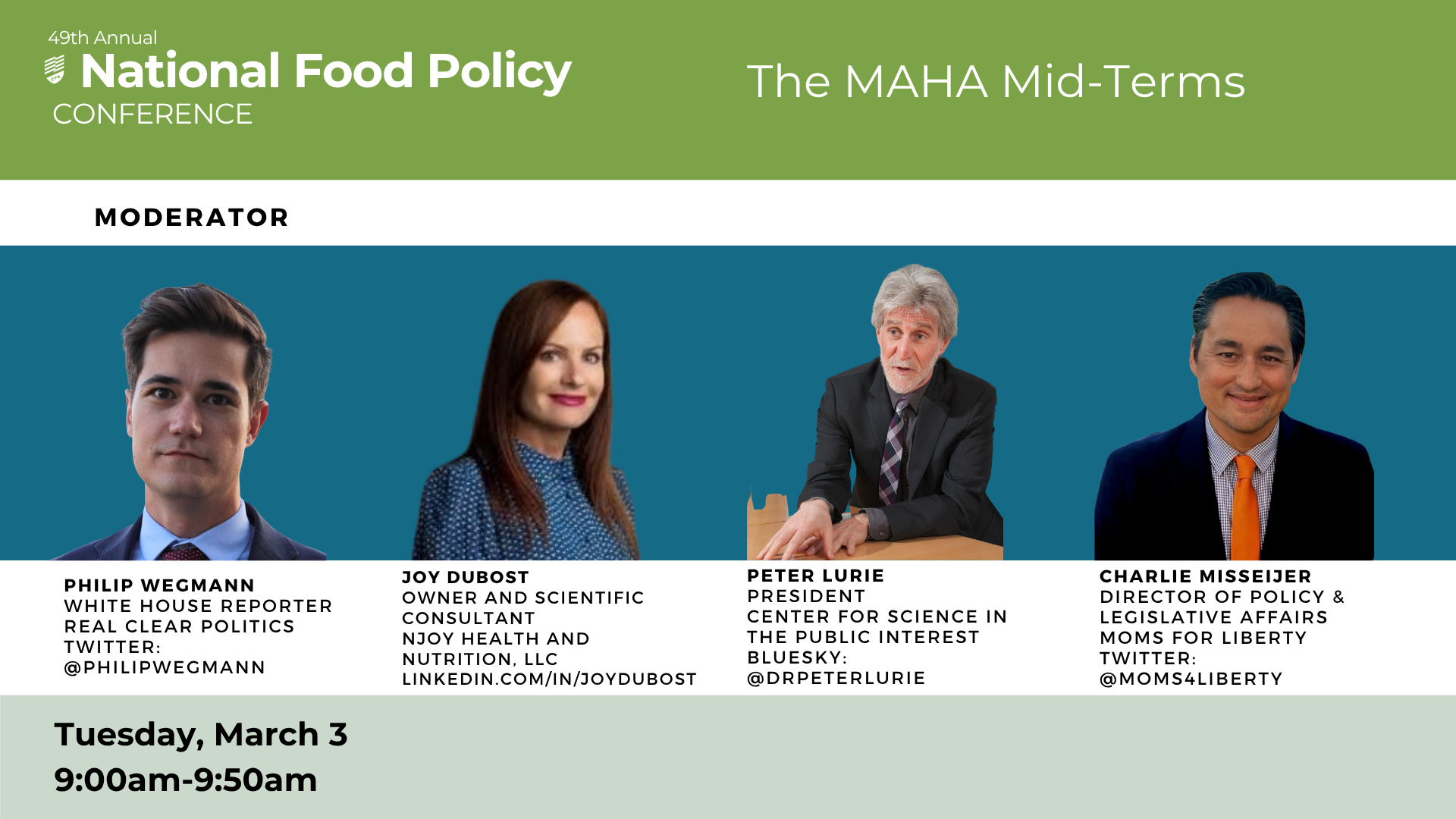
9:00 AM
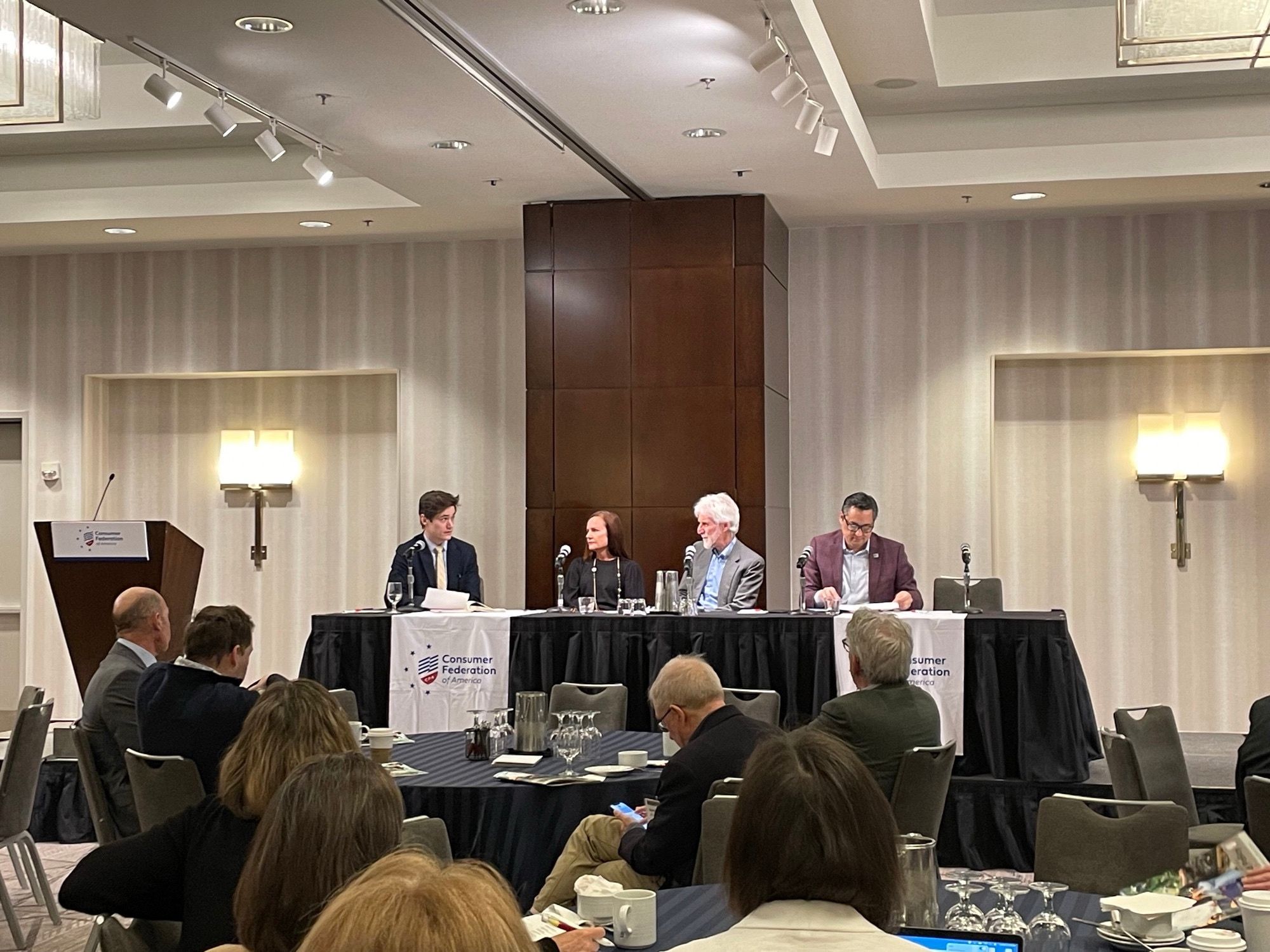
Plenary Session: The MAHA Mid-Terms
Approximately 1 in 20 voters who backed President Trump for the first time in November 2024 said they did so because he vowed to “make America healthy again.” Thus far, the Administration’s policies have had wide ranging impacts on food product reformulation, food assistance programs, the Dietary Guidelines for Americans, and tariffs on foods and food ingredients. Political strategists on both sides of the aisle are looking to MAHA voters to boost their candidates’ prospects in the 2026 midterm elections. How will recent policy changes affect the food system and how will electoral politics in turn influence MAHA food policy priorities?
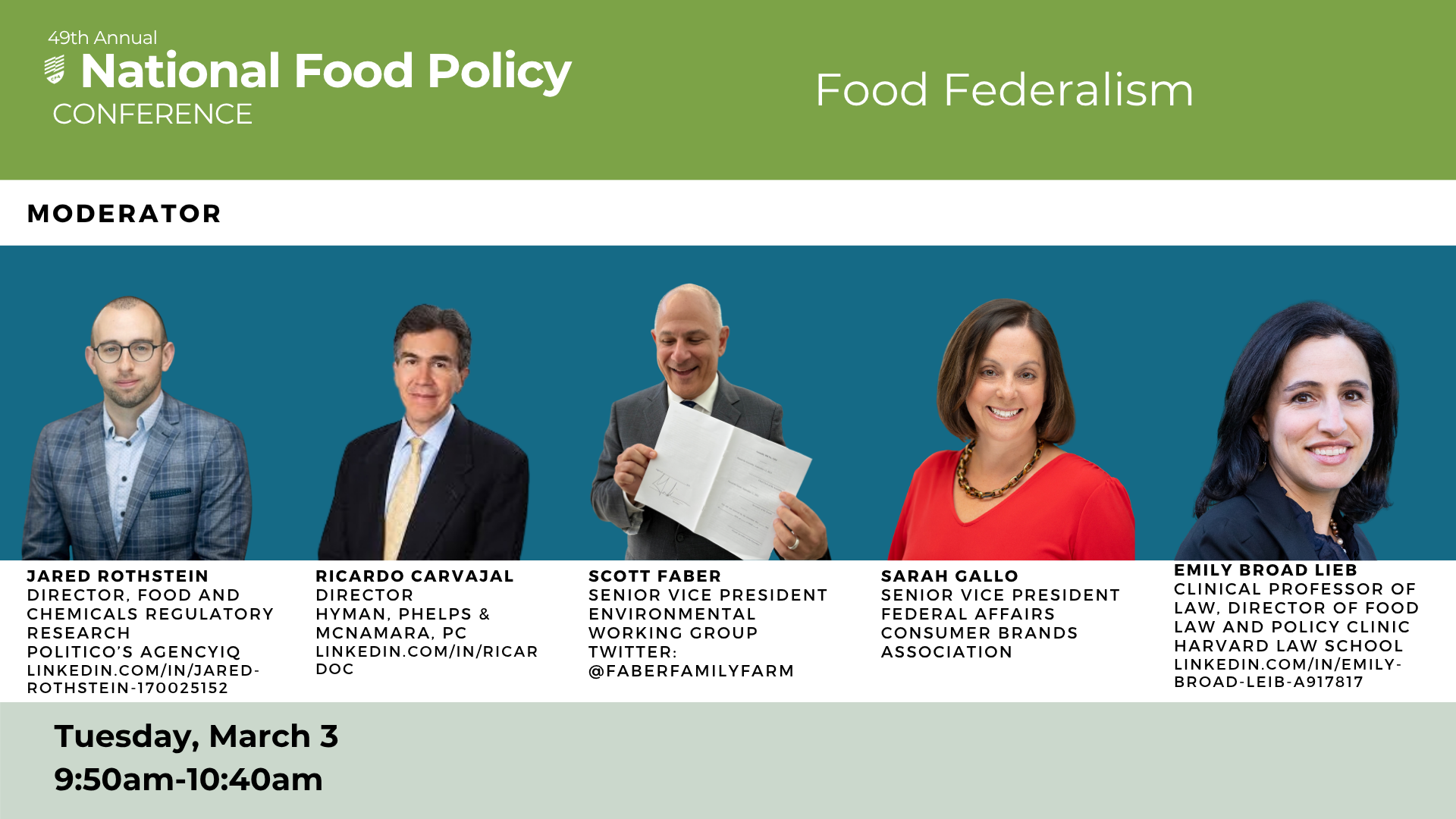
9:50 AM
Plenary Session: Food Federalism
The Trump Administration has applauded state laws that introduce new labeling requirements for, or outright ban, foods with ingredients like synthetic dyes. However, it has also sued California to block the state’s cage-free egg and animal welfare law. At the same time, Congress has debated legislation to create federal standards and preempt state regulation of food expiration date labeling, pet food, pesticides, food additives, and more. How should state and federal food policy interact? When is federal preemption justified, and when should states act as “laboratories of democracy” on food policy?
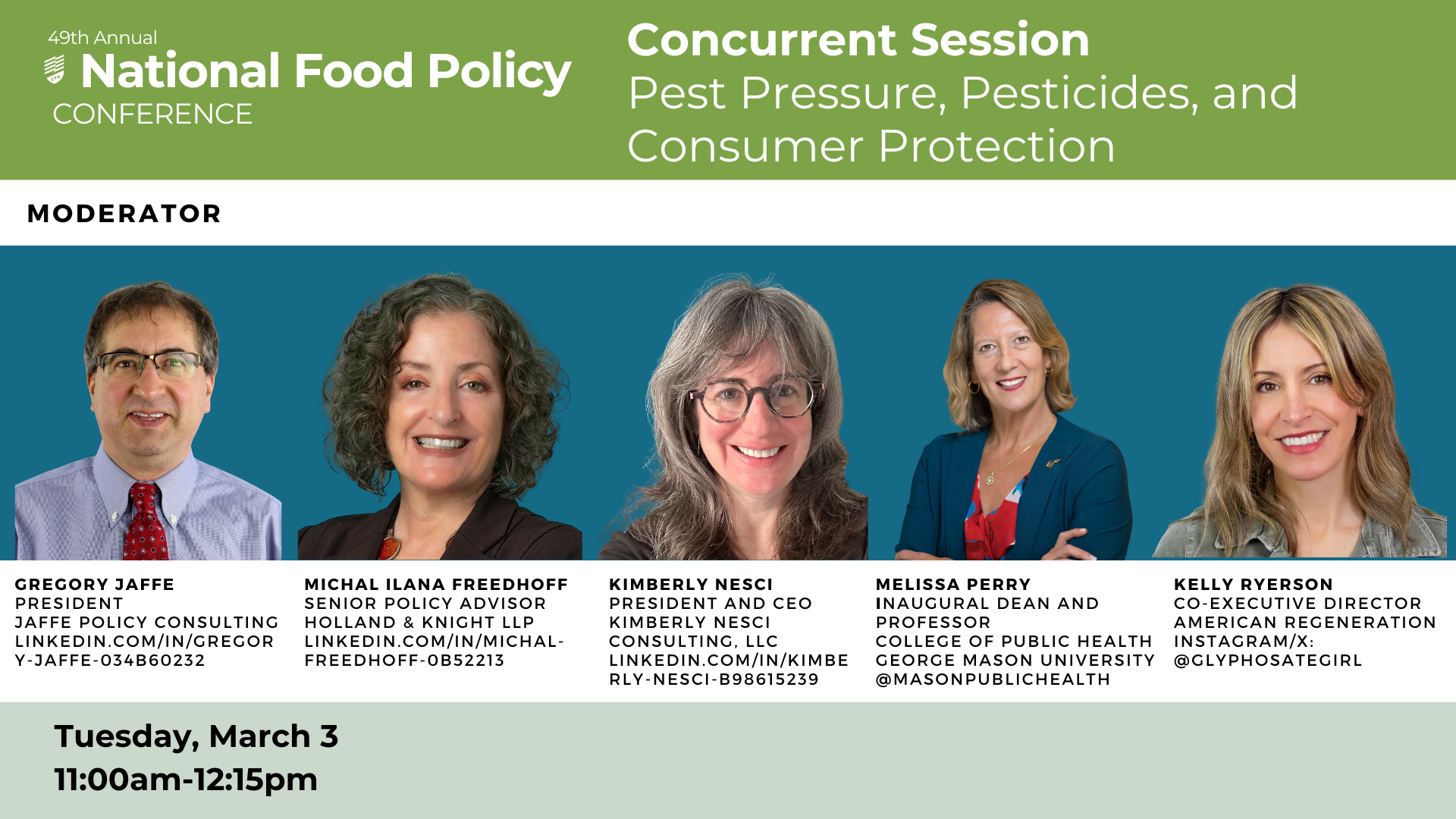
10:40 AM
Concurrent Session: Pest Pressure, Pesticides, and Consumer Protection
U.S. farmers spend an estimated $16.5 billion on pesticides, according to the U.S. Environmental Protection Agency, which has recently eased restrictions on the chemicals’ use. But concerns about longstanding policies governing pesticide application have been growing across the political spectrum. What is the proper role of pesticides in agriculture? Where is there consensus for reform? What are the risks facing consumers and farmworkers?
10:40 AM
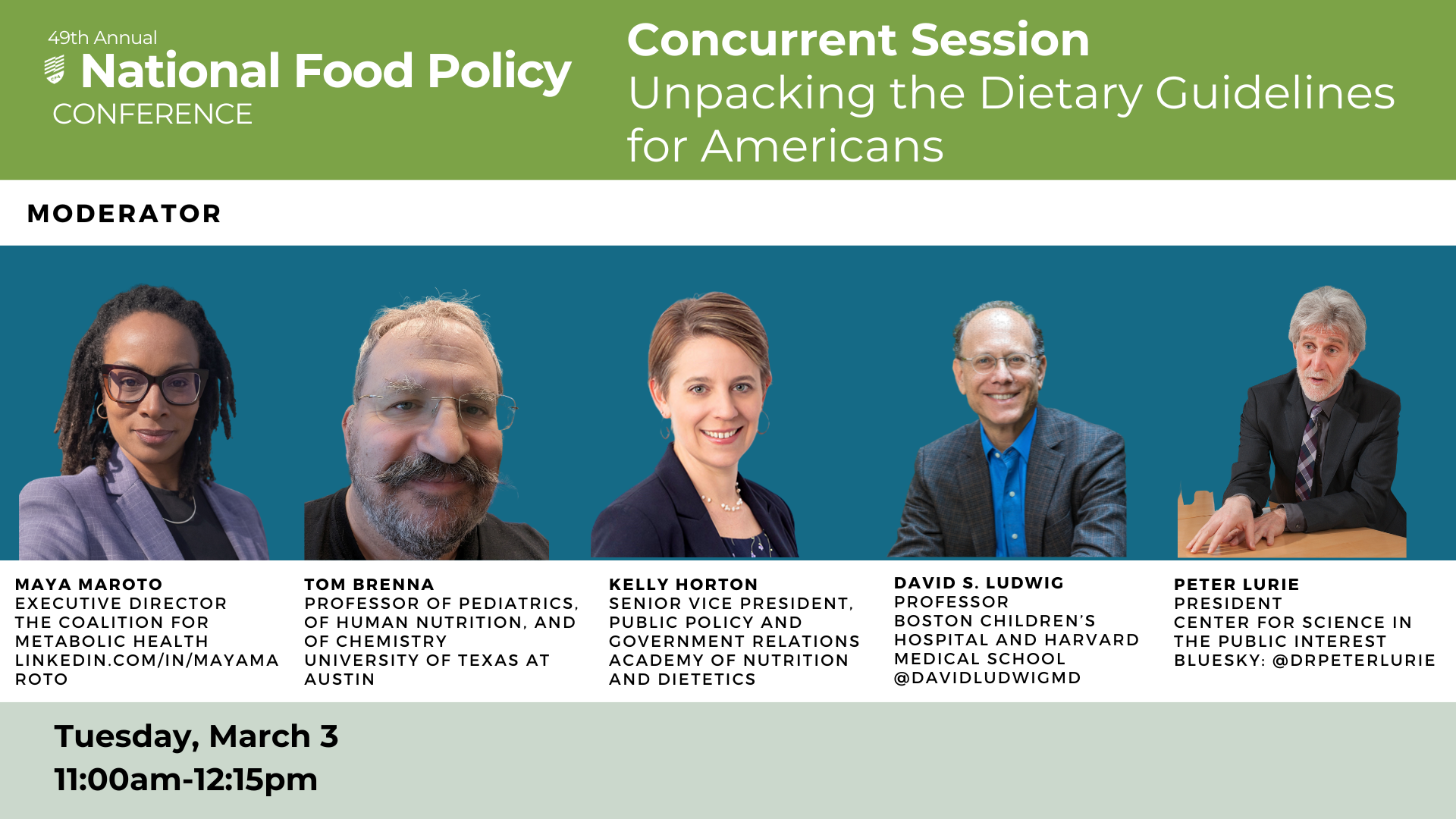
Concurrent Session: Unpacking the Dietary Guidelines for Americans
Since their initial publication in 1980, the Dietary Guidelines for Americans have remained relatively consistent. How does the latest iteration of the DGAs fit into that context? This panel discussion will examine how the new DGAs deviate from past guidelines, as well as recent Dietary Guidelines Advisory Committee recommendations, with respect to advice on ultra-processed foods, saturated fat, alcohol, and other areas, and what these changes say about the future of official dietary guidelines in the U.S.
10:40 AM
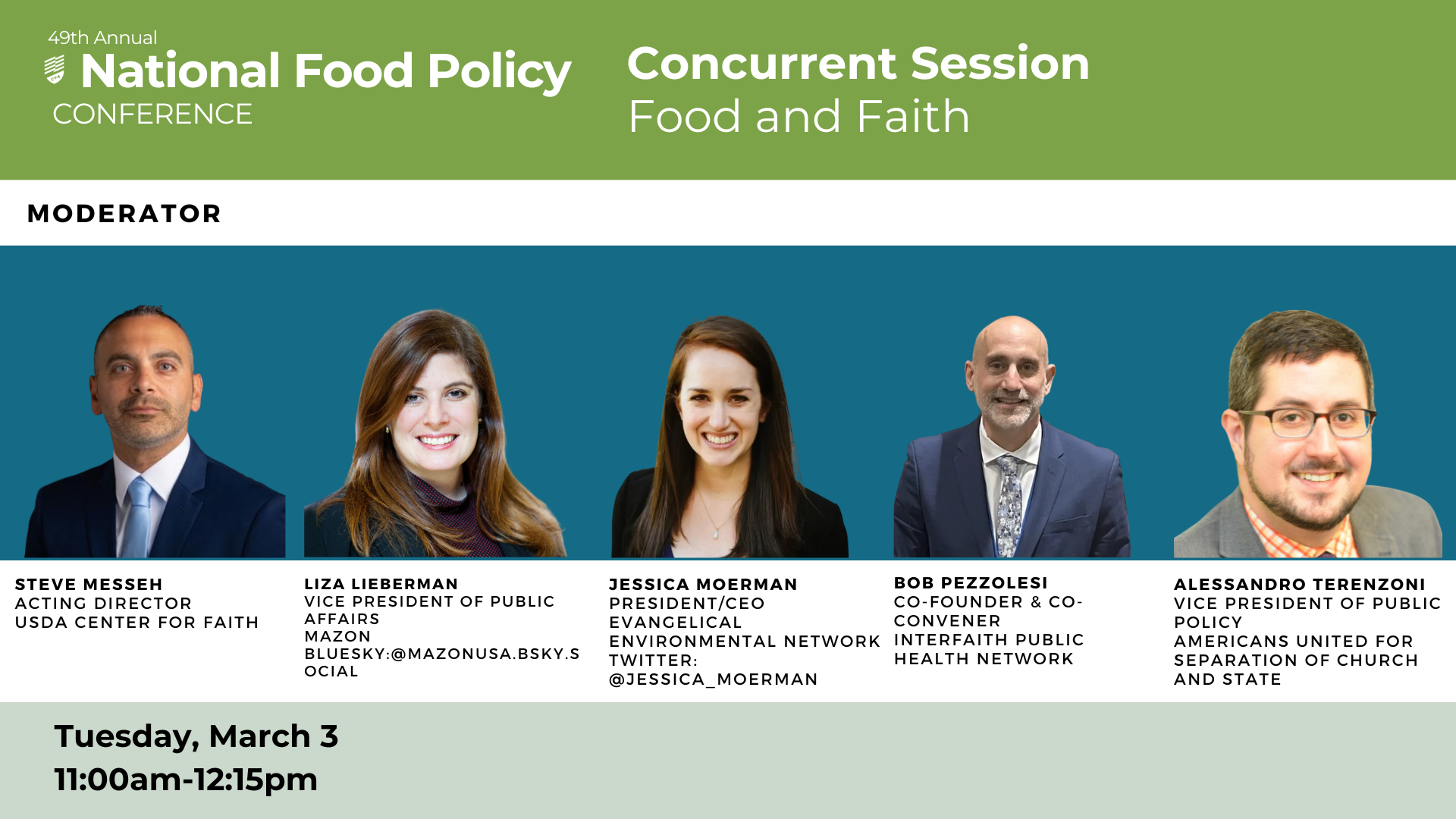
Concurrent Session: Food and Faith
Faith-based organizations have long played an outsized role in U.S. food assistance, with many working to influence public policy through advocacy and education. What is the appropriate role of faith-based organizations in food policy? How are faith-based organizations responding to changes in the federal food policy landscape? How does the work of faith-based food assistance organizations relate to the larger role of religious movements in politics that have called for reducing government food assistance?
12:45 PM
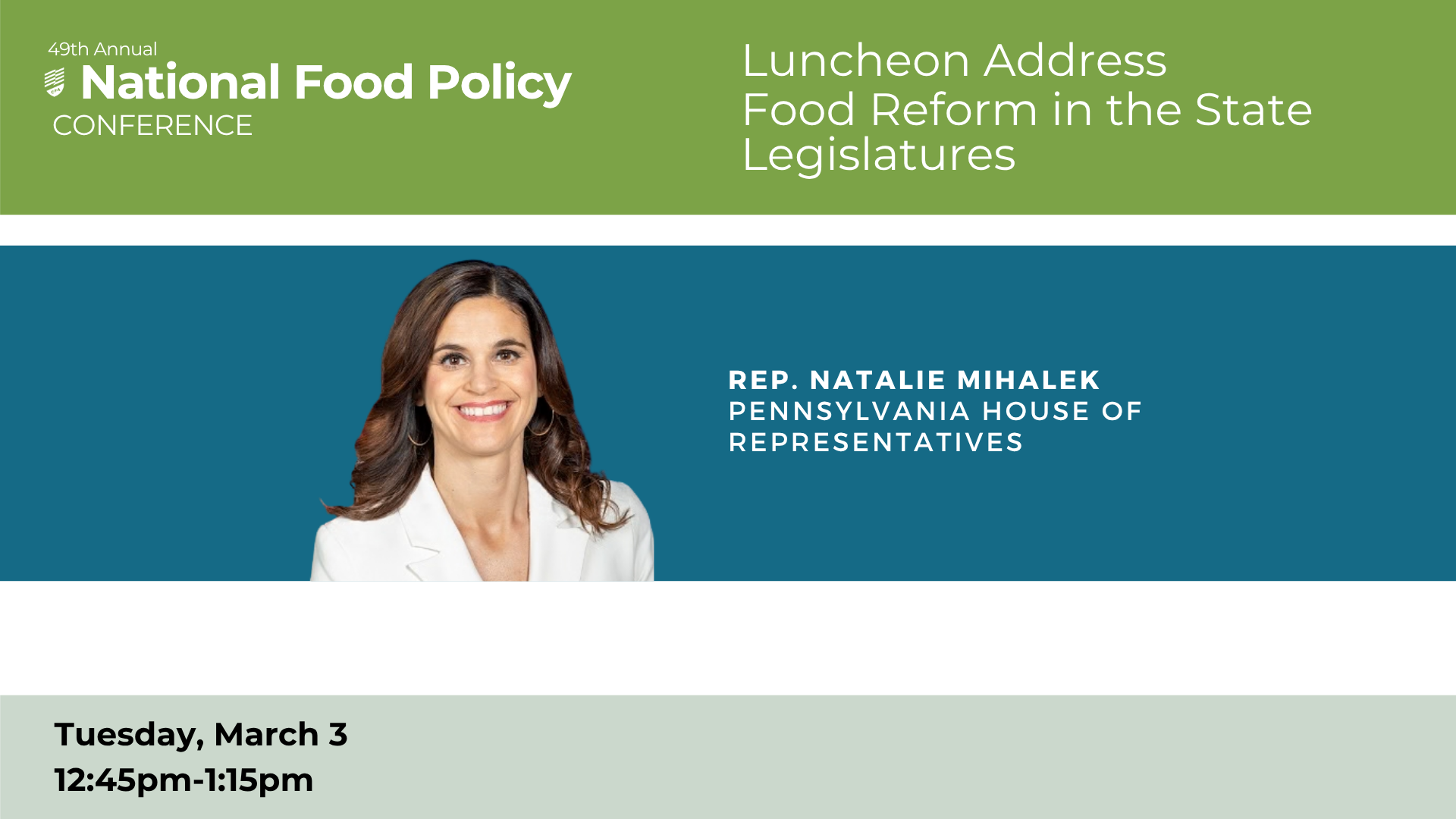
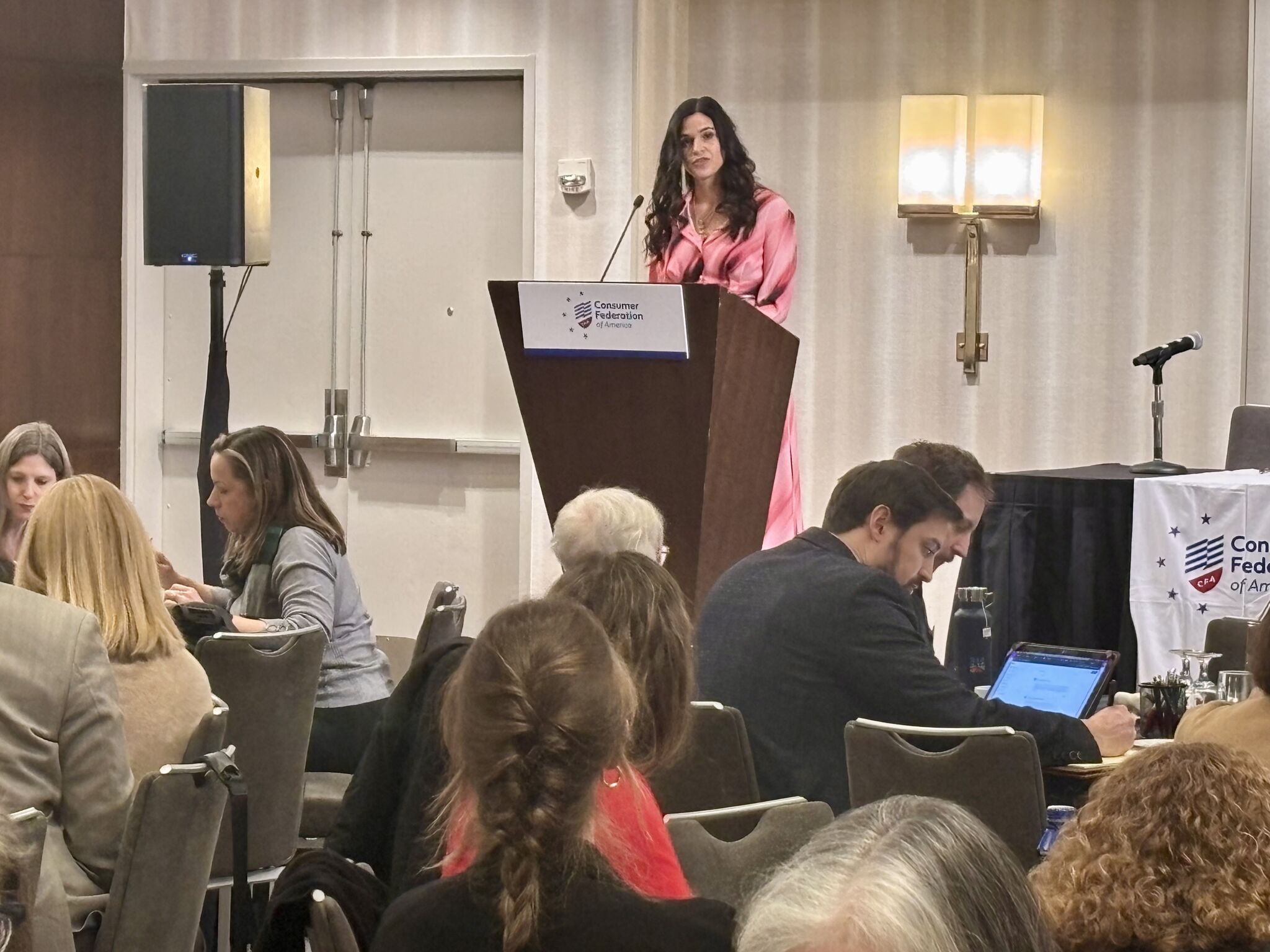
Luncheon Address
Speaker
Rep. Natalie Mihalek
Pennsylvania House of Representatives
1:30 PM
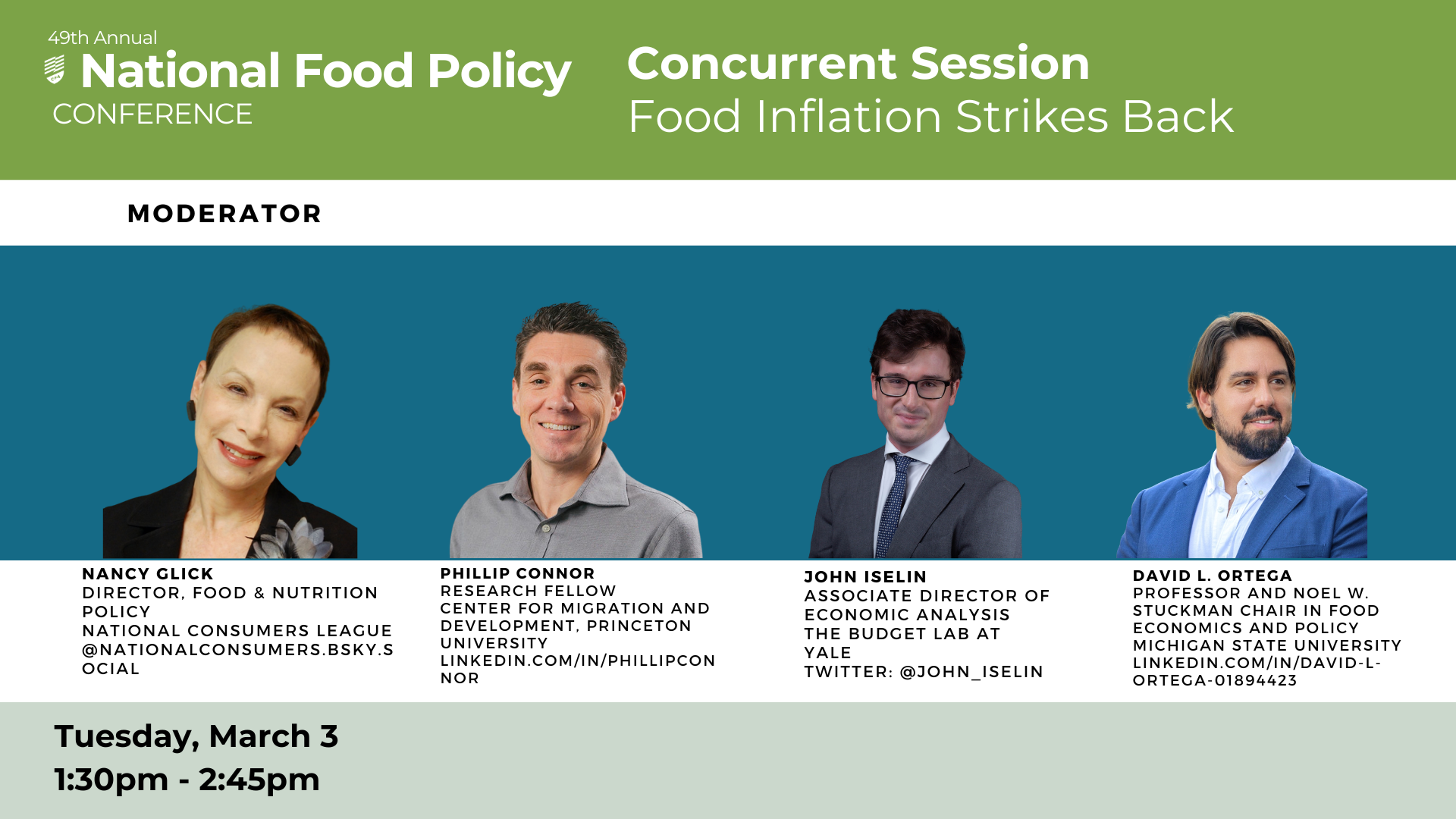
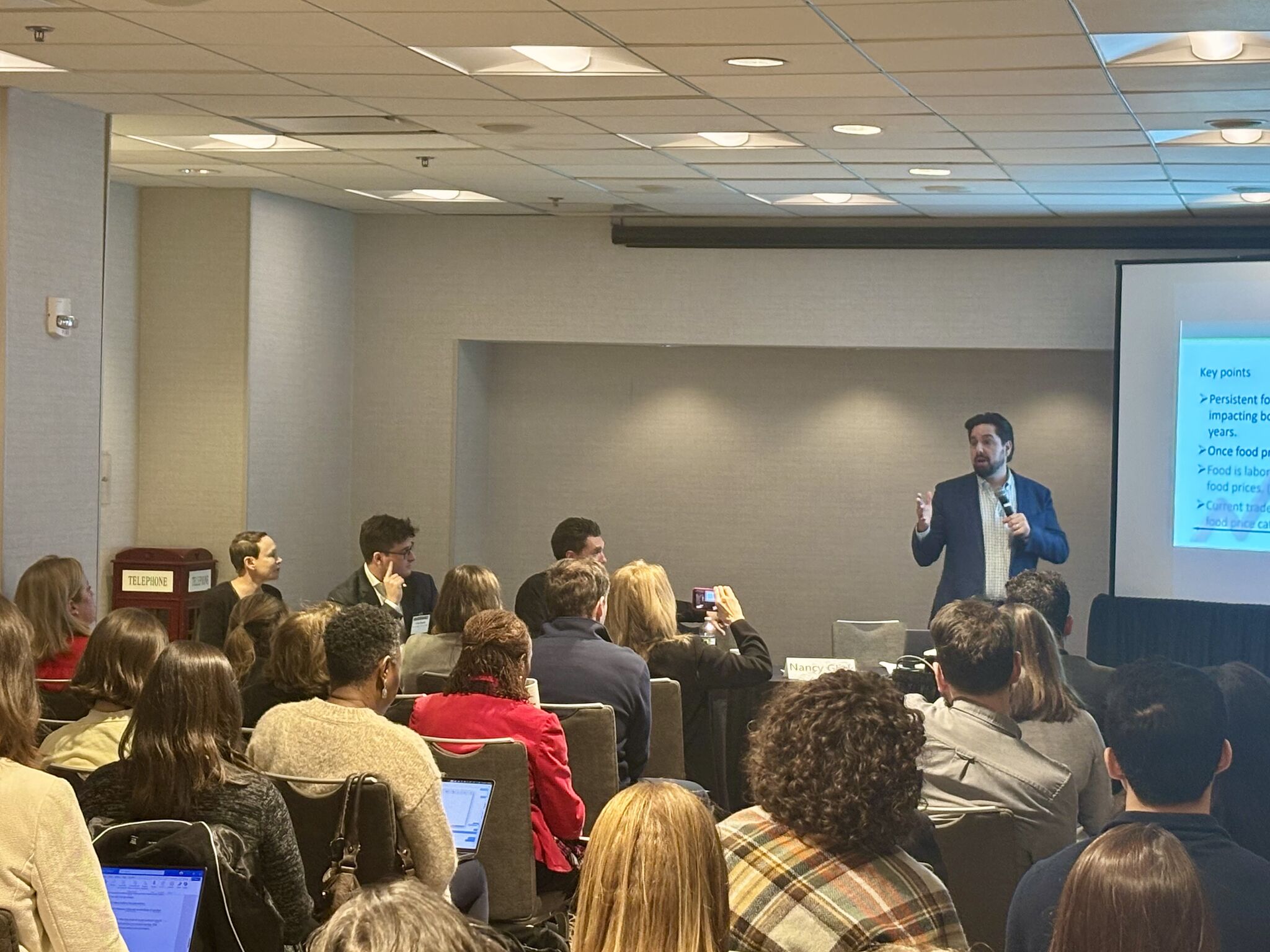
Concurrent Session: Food Inflation Strikes Back
After soaring pandemic era inflation, food prices seemed to stabilize, only to begin creeping upward again during the first months of the second Trump Administration. What are the most important factors driving food inflation? How are consumers and industry adjusting to higher prices? How much does food inflation undermine progress towards improving American diets and reducing diet-related disease?
1:30 PM
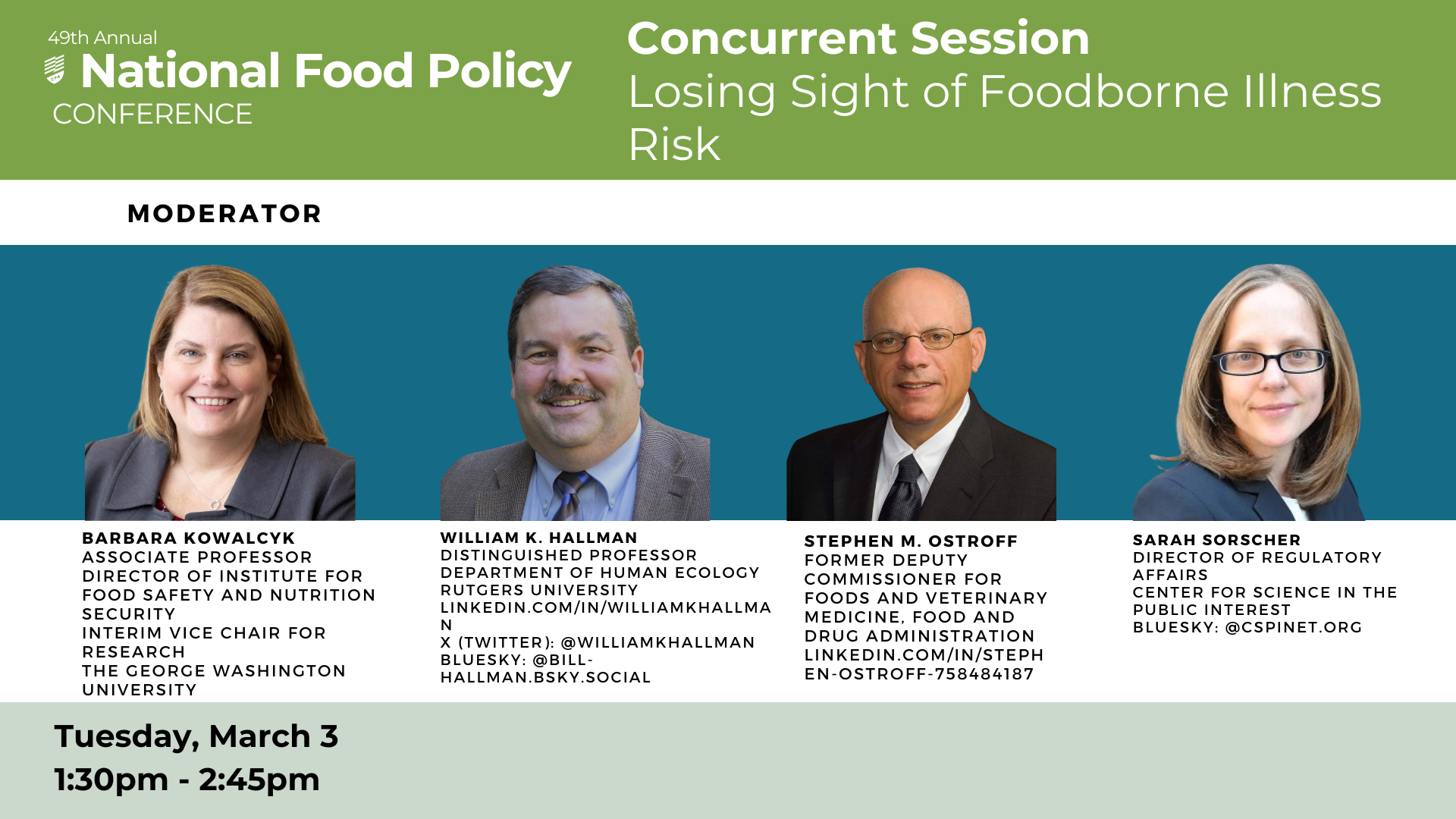
Concurrent Session: Losing Sight of Foodborne Illness Risk
As concerns about food chemical safety risks surge, federal funding cuts have raised concerns about the health systems responsible for detecting foodborne illness outbreaks. At the height of the COVID-19 pandemic, federal funding, mostly through the Centers for Disease Control and Prevention, accounted for an estimated 55% of local health department budgets. With cuts at CDC exacerbating pressures to cut back on foodborne illness disease surveillance, how are state and local policymakers responding? Do recent policy changes track consumer perceptions of risk related to chemical and microbiological food safety?
1:30 PM
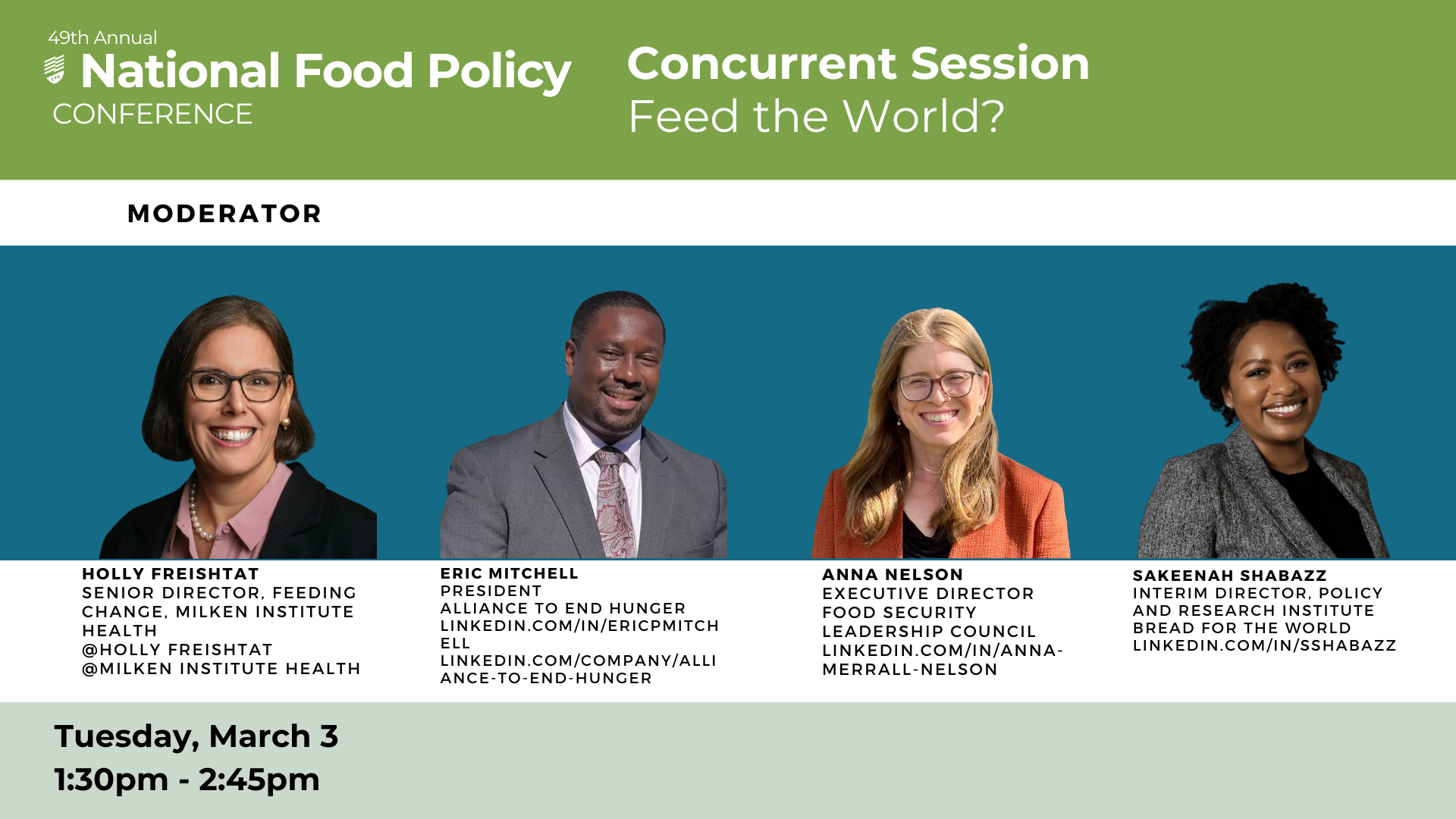
Concurrent Session: Feed the World?
Nearly a year after the dismantling of USAID, the largest ever restructuring of U.S. foreign aid programs has triggered a cascade of foreign policy and humanitarian responses. What lessons can be gleaned so far? Why have many other industrialized countries similarly reduced foreign aid commitments? How have these changes affected hunger across the globe? How will foreign aid cuts affect the U.S. agriculture industry?
3:00 PM
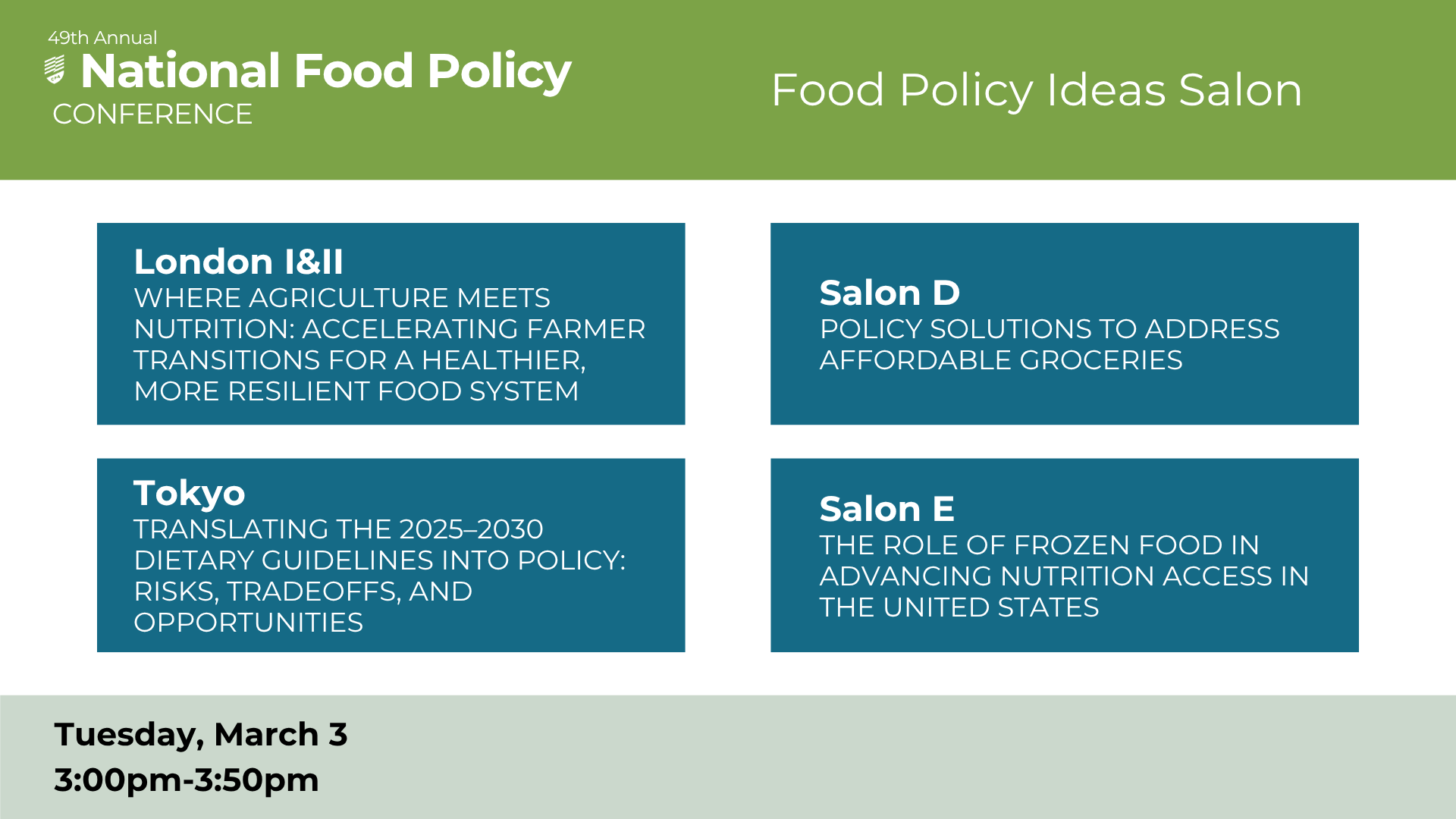
Food Policy Ideas Salon
Policy Solutions to Address Affordable Groceries (UFCW)
The Role of Frozen Food in Advancing Nutrition Access in the United States (AFFI)
Where Agriculture Meets Nutrition: Accelerating Farmer Transitions for a Healthier, More Resilient Food System (Danone)
Translating the 2025–2030 Dietary Guidelines into Policy: Risks, Tradeoffs, and Opportunities (CSPI)
4:00 PM
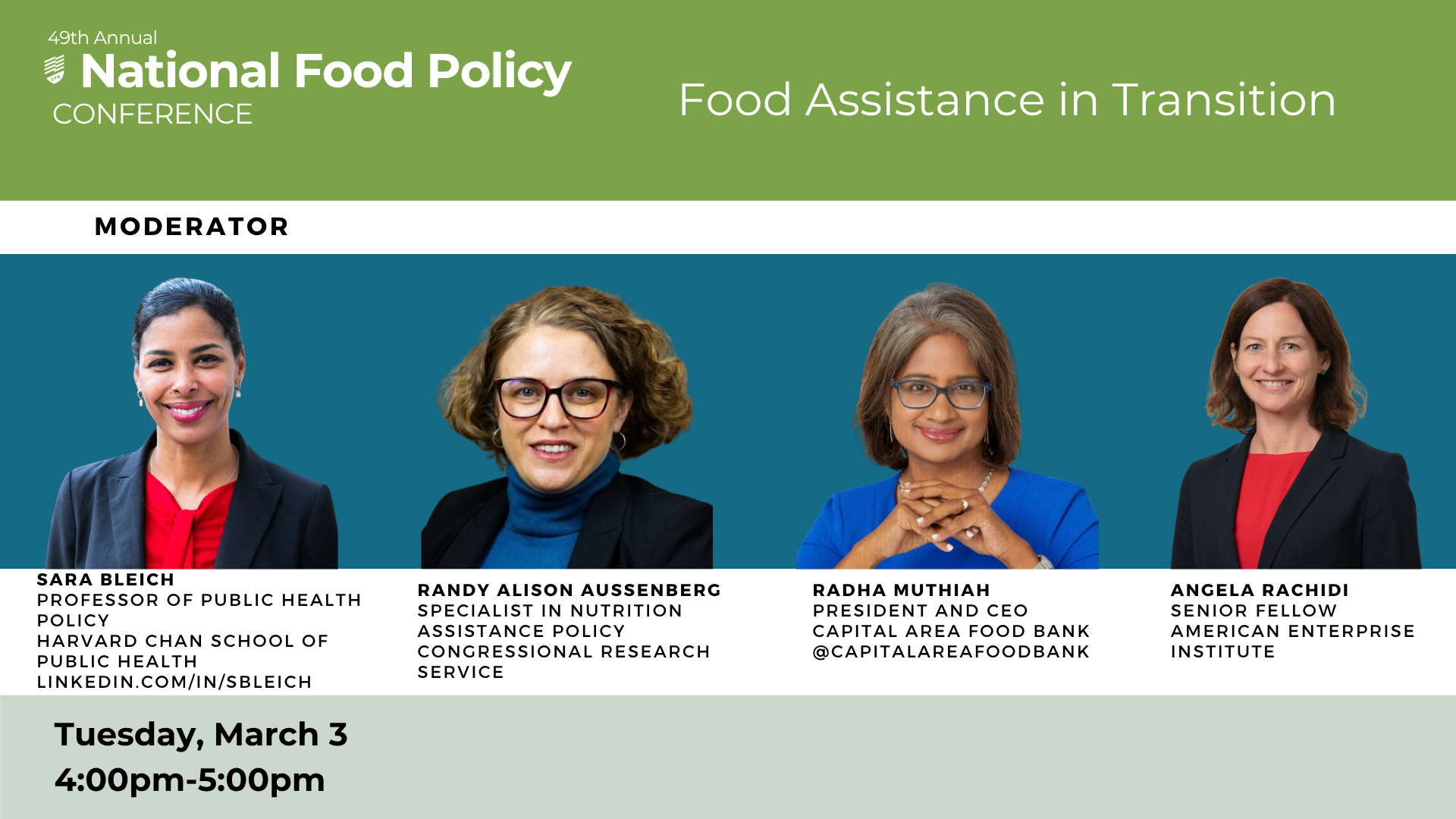
Plenary Session: Food Assistance in Transition
For the first time ever, federal food assistance benefits were cut off to millions of Americans during the federal government shutdown in Fall of 2025. Funding for the Supplemental Nutrition Assistance Program has since been restored, but the One Big Beautiful Bill Act expands work requirements and makes other reforms that will eliminate or significantly reduce SNAP for approximately four million beneficiaries. As states implement these reforms, what is the impact? How are consumers, industry, and state and local policymakers adapting?
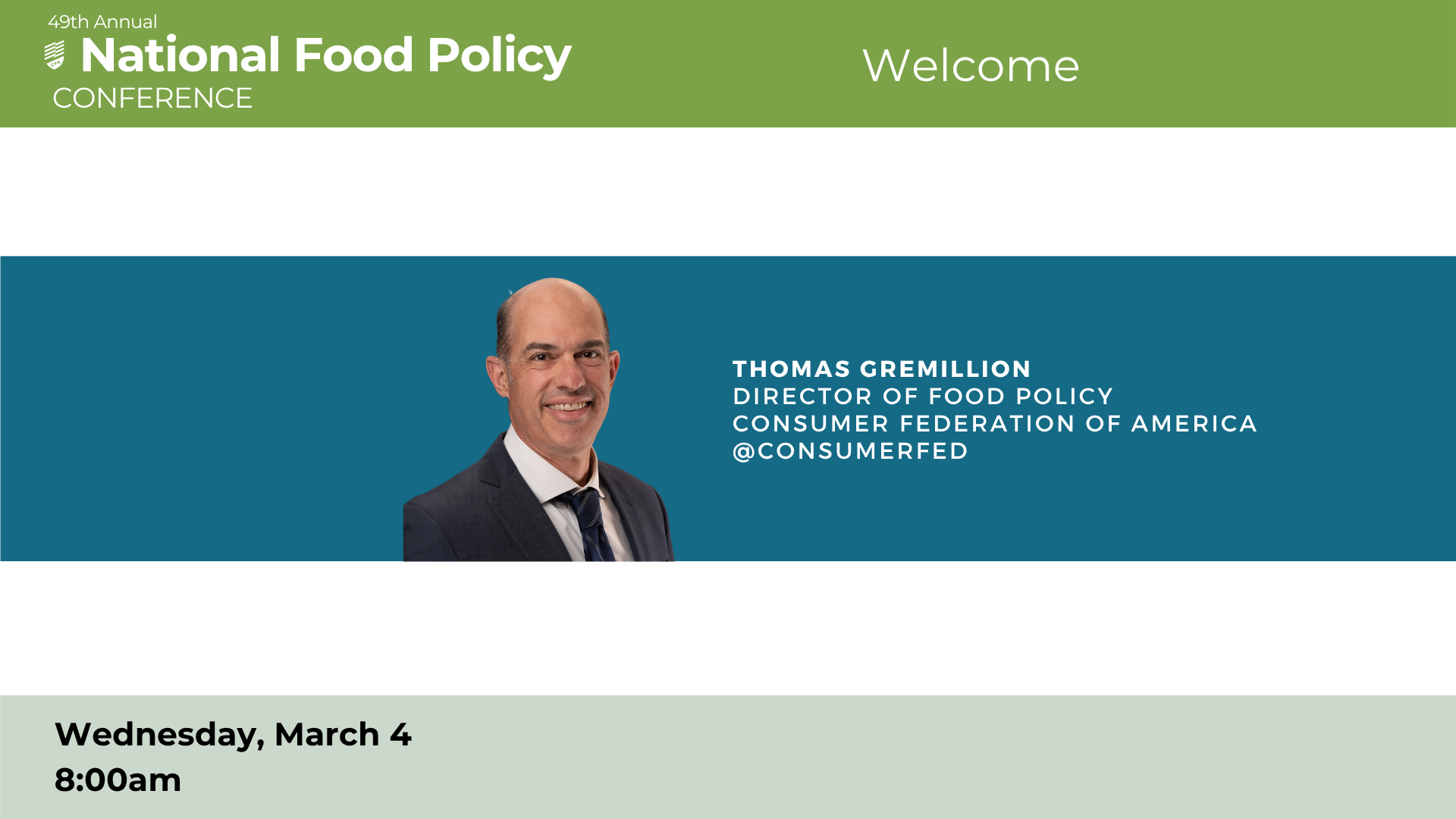
8:00 AM
Welcome
Speaker
Thomas Gremillion
Director of Food Policy
Consumer Federation of America
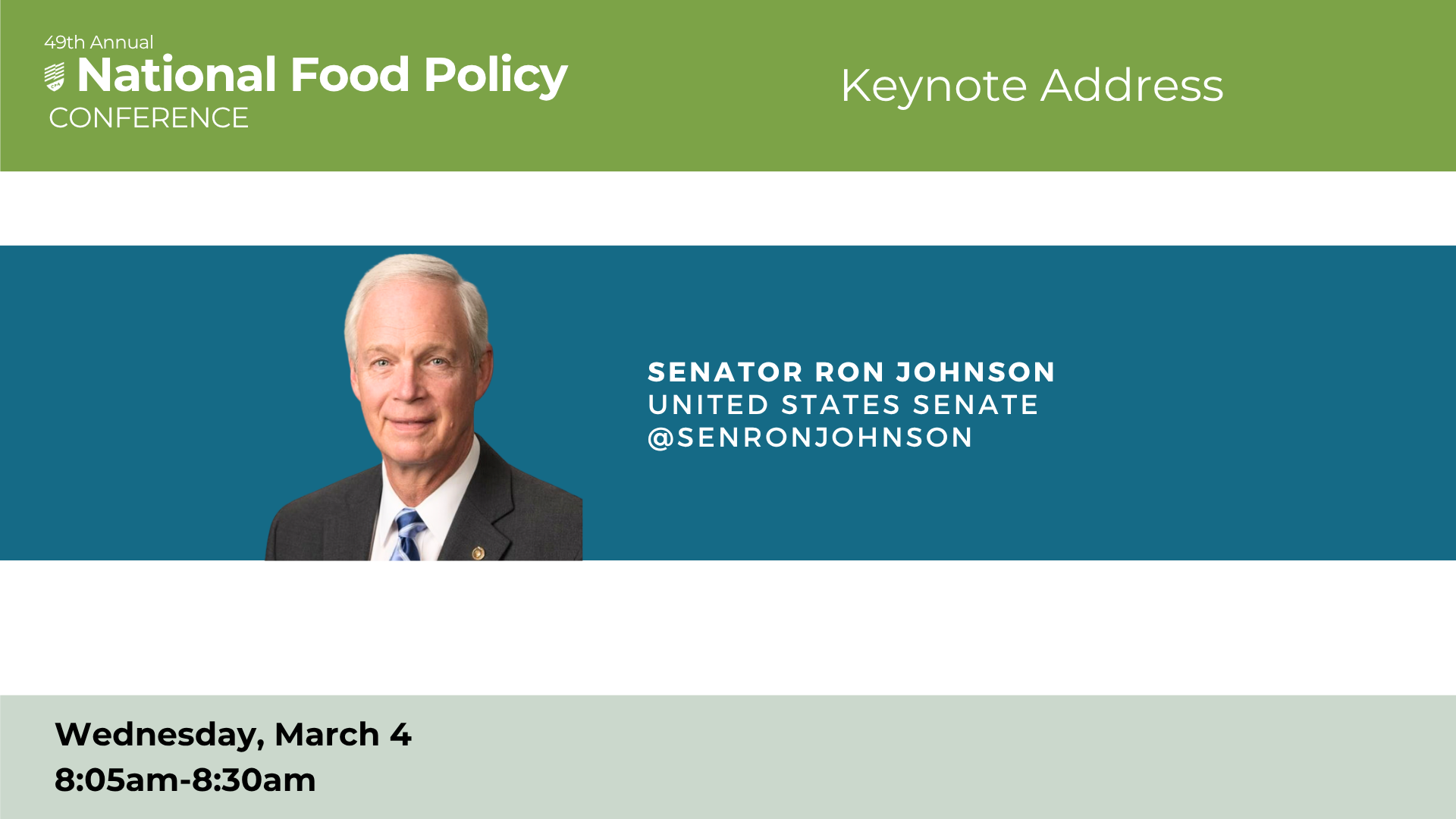
8:05 AM
Keynote Address
Speaker
Senator Ron Johnson
U.S. Senate
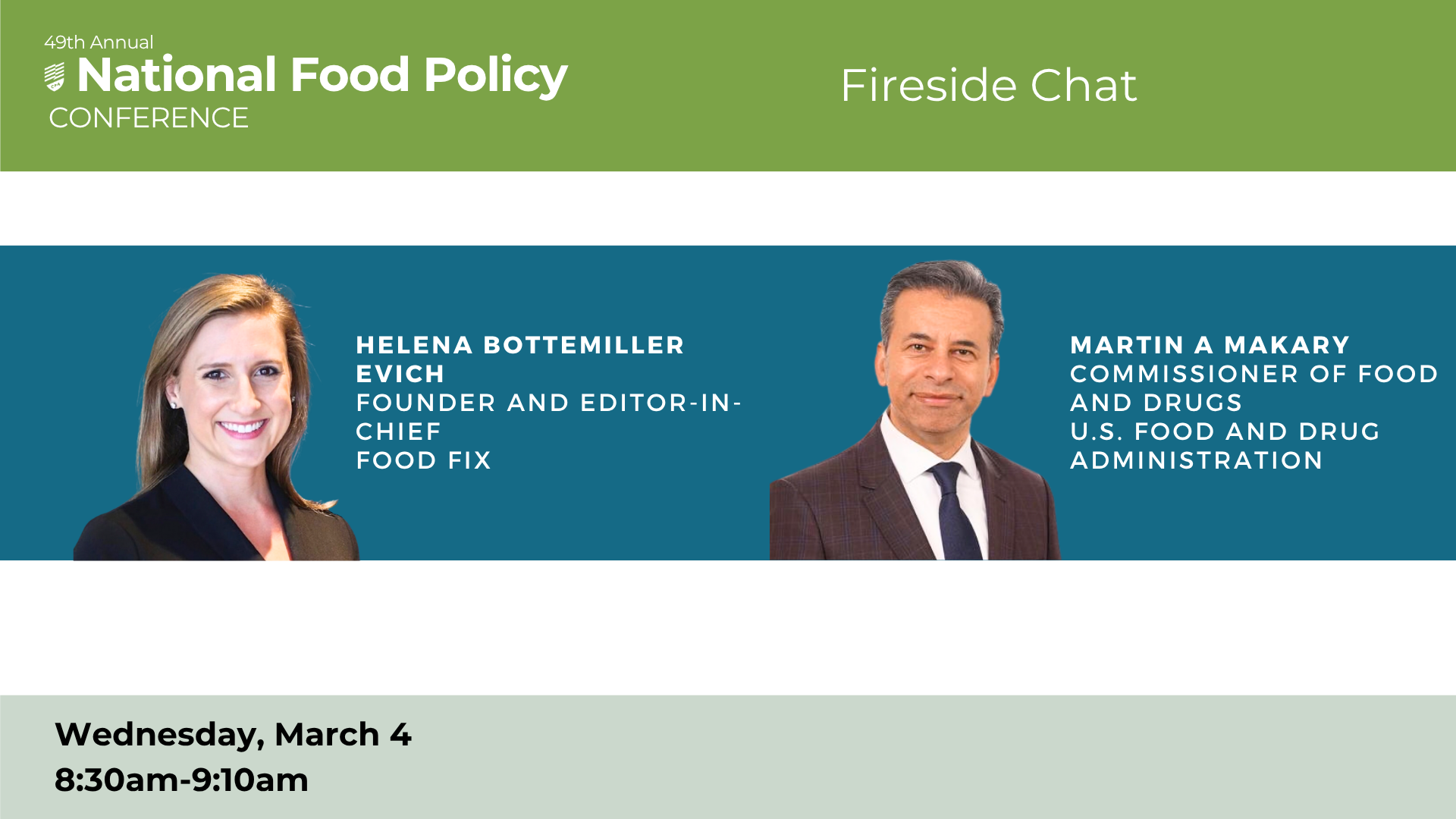
8:30 AM
Fireside Chat with FDA Commissioner Makary
Moderator
Helena Bottemiller Evich
Food Fix
Speaker
Martin A. Makary
Commissioner of Food and Drugs
U.S. Food and Drug Administration
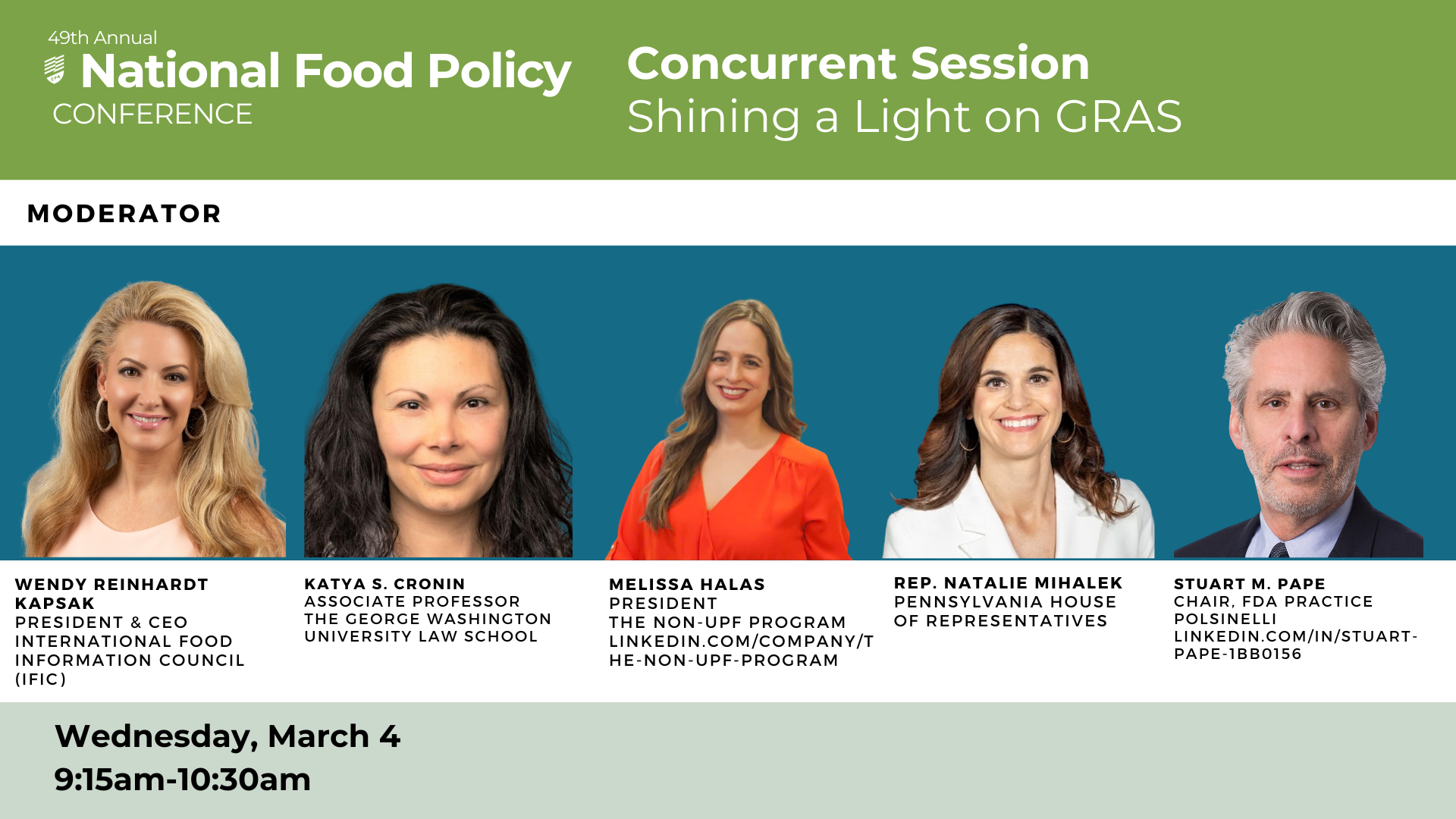
9:15 AM
Concurrent Session: Shining a Light on GRAS
As the U.S. Food and Drug Administration works to update the rules for “Generally Recognized as Safe” food substances, these ubiquitous ingredients continue to command popular attention. FDA is poised to require mandatory submission of GRAS notices for qualifying ingredients. Will more transparency adequately address concerns about the “GRAS loophole”? How should FDA respond when new evidence of harm caused by a GRAS substance emerges?
9:15 AM
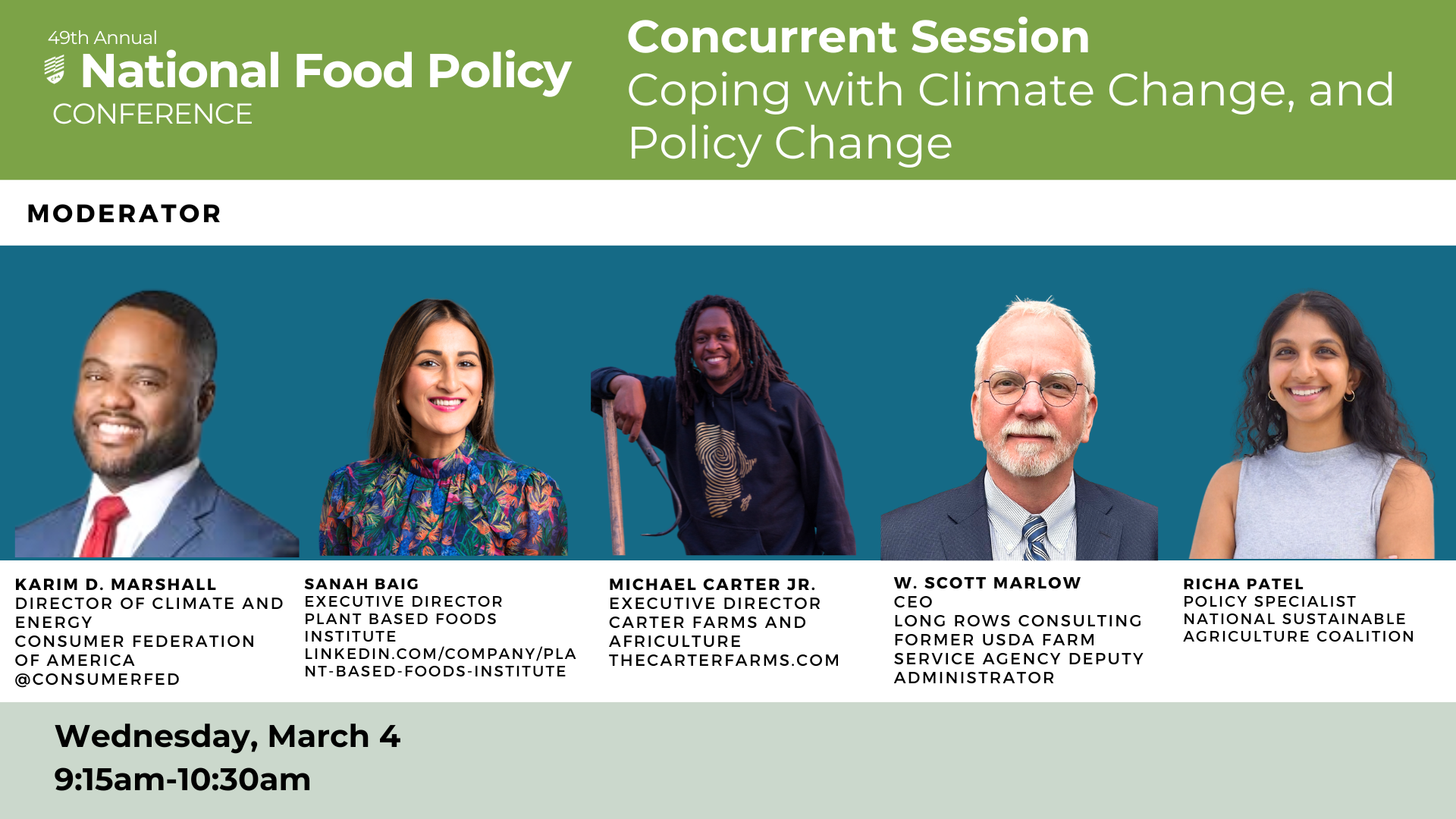
Concurrent Session: Coping with Climate Change, and Policy Change
Under the second Trump administration, many federal programs aimed at helping farmers and ranchers mitigate climate change, or adopt conservation-oriented agriculture, have been paused or eliminated. In other cases, federal agencies have preserved funding streams but introduced new criteria for grantees. How are food producers adjusting to the shifting policy landscape? How will these changes affect the food system?
9:15 AM
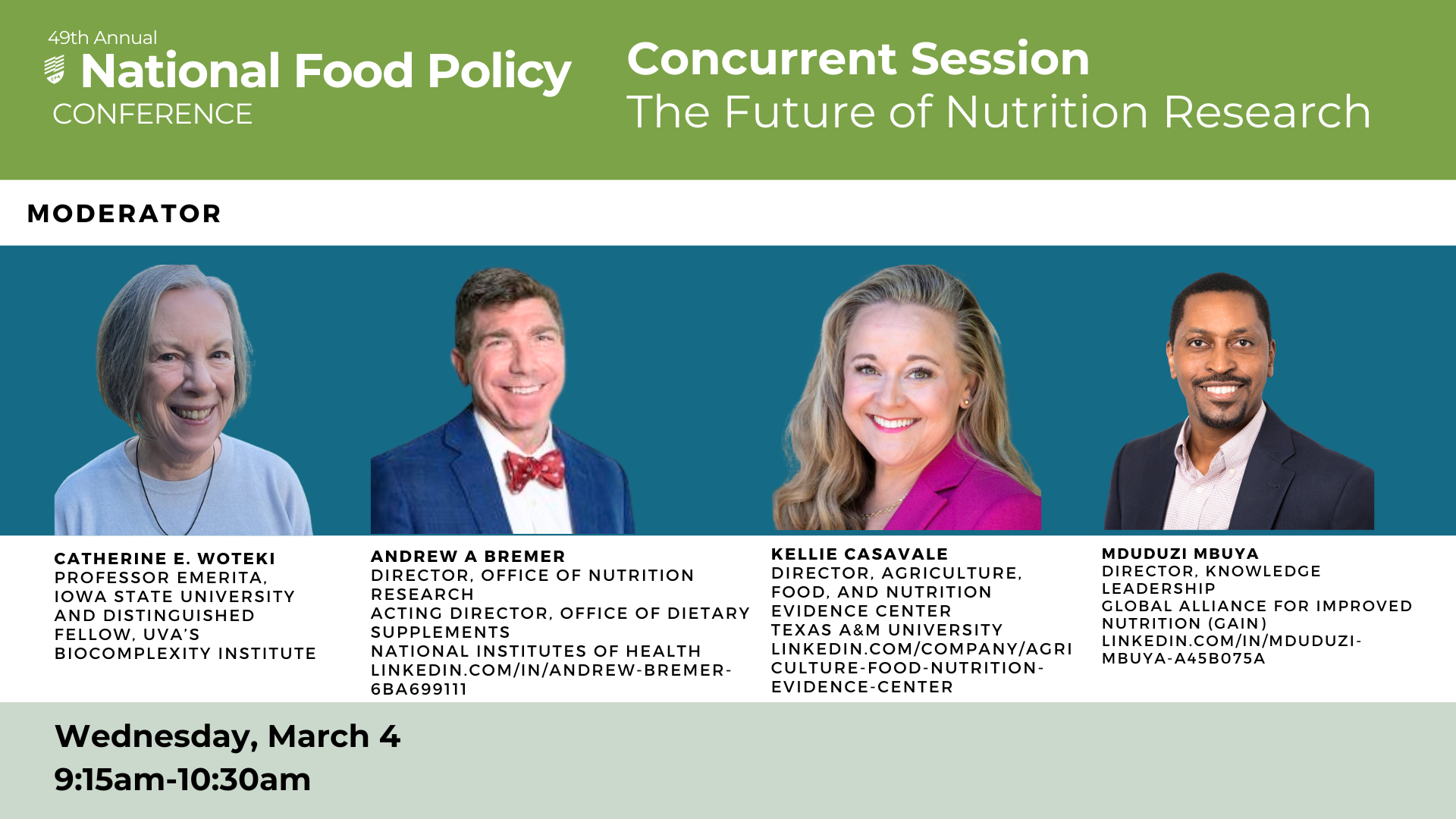
Concurrent Session: The Future of Nutrition Research
As diet-related diseases have ravaged public health, support for research into how nutrition affects health and wellness has grown across the political spectrum. But nutrition research continues to face significant challenges—from inadequate funding and infrastructure to inherent complexities in studying food and diet. This panel explores opportunities for a new, coordinated approach, and what it will take to produce actionable evidence for policymakers and the food industry, rebuild public trust, and make meaningful progress against obesity and chronic disease.
10:45 AM
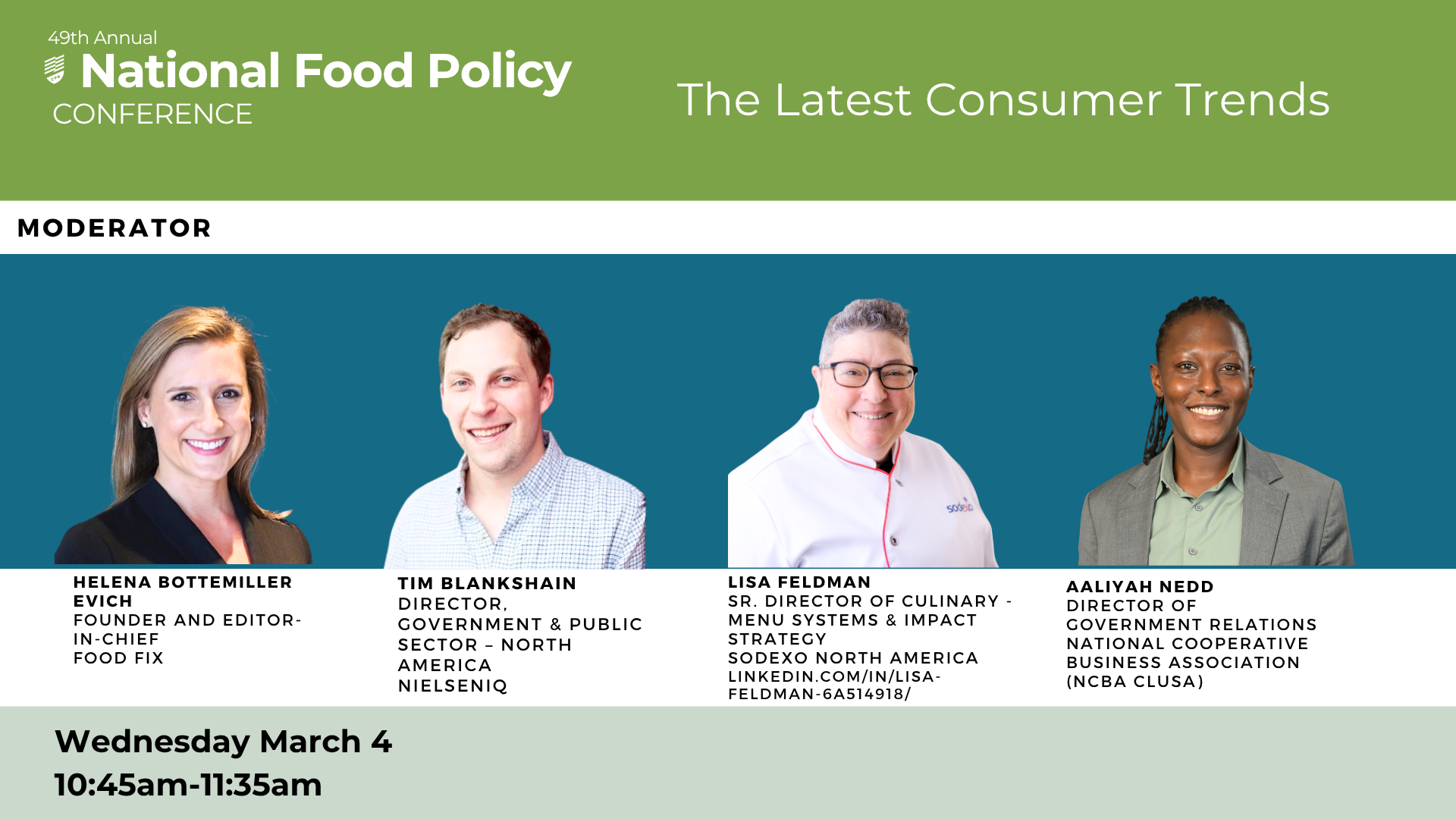
Plenary Session: The Latest Consumer Trends
How is media attention on ultra-processed foods and food additives affecting what consumers buy, company product portfolios, and marketing strategies? What patterns are emerging among Millenial and Gen Z consumers’ eating and food purchasing habits? What lessons should policymakers take from the emerging food trends?
11:40 AM
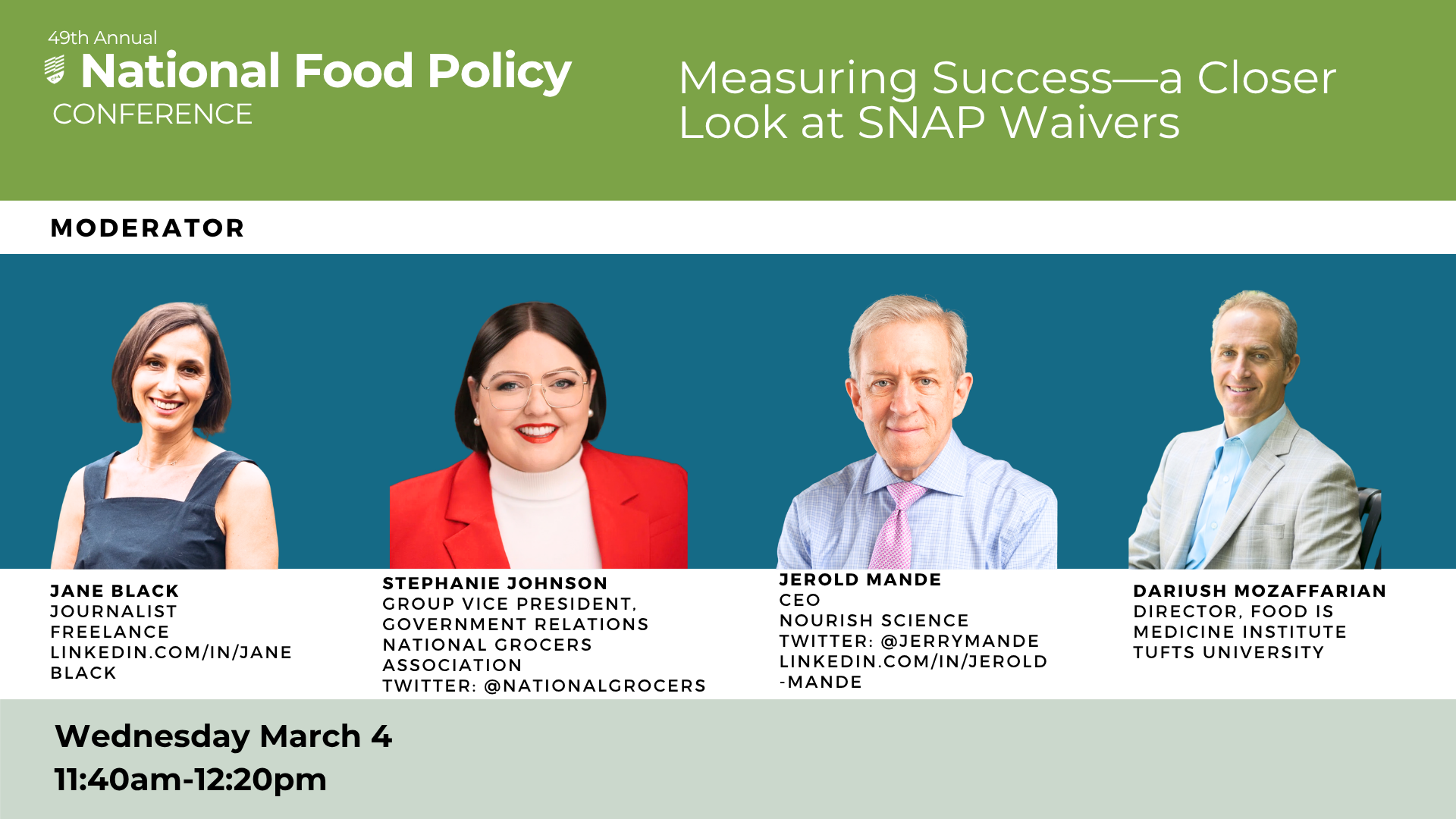
Plenary Session: Measuring Success—a Closer Look at SNAP Waivers
USDA has granted waivers to states across the country allowing officials to exclude sugary beverages and other “unhealthy” foods from eligibility under the Supplemental Nutrition Assistance Benefits program. Administration leaders have celebrated these states as “laboratories of innovation” that will reduce public subsidies for junk food and show the way towards “bold solutions to long-ignored challenges.” As states adopt a variety of restrictions on SNAP eligible foods, how are policymakers evaluating the costs and benefits of these policies? What evidence should policymakers collect to measure the waivers’ efficacy in nudging consumers toward healthier diets?
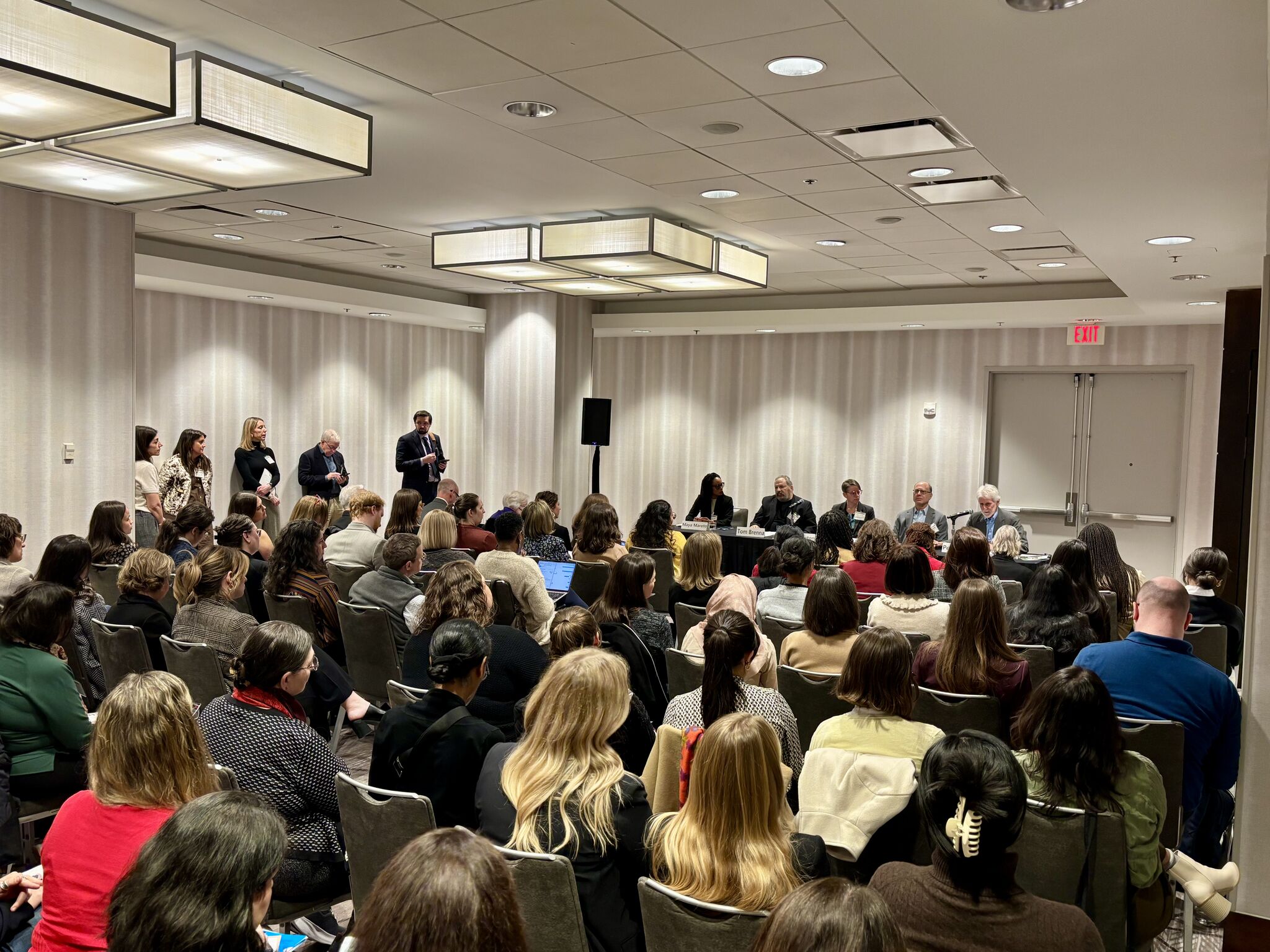
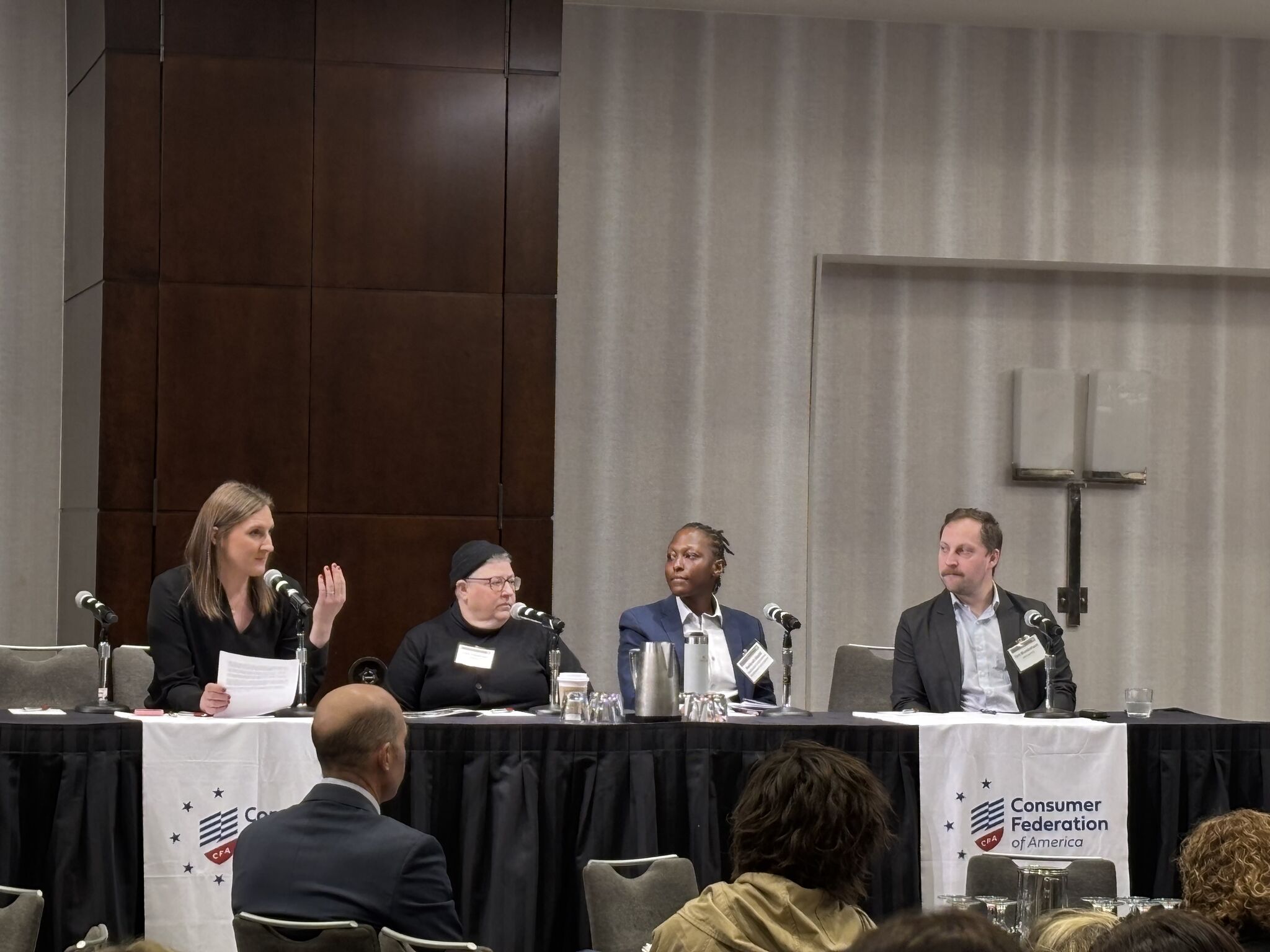
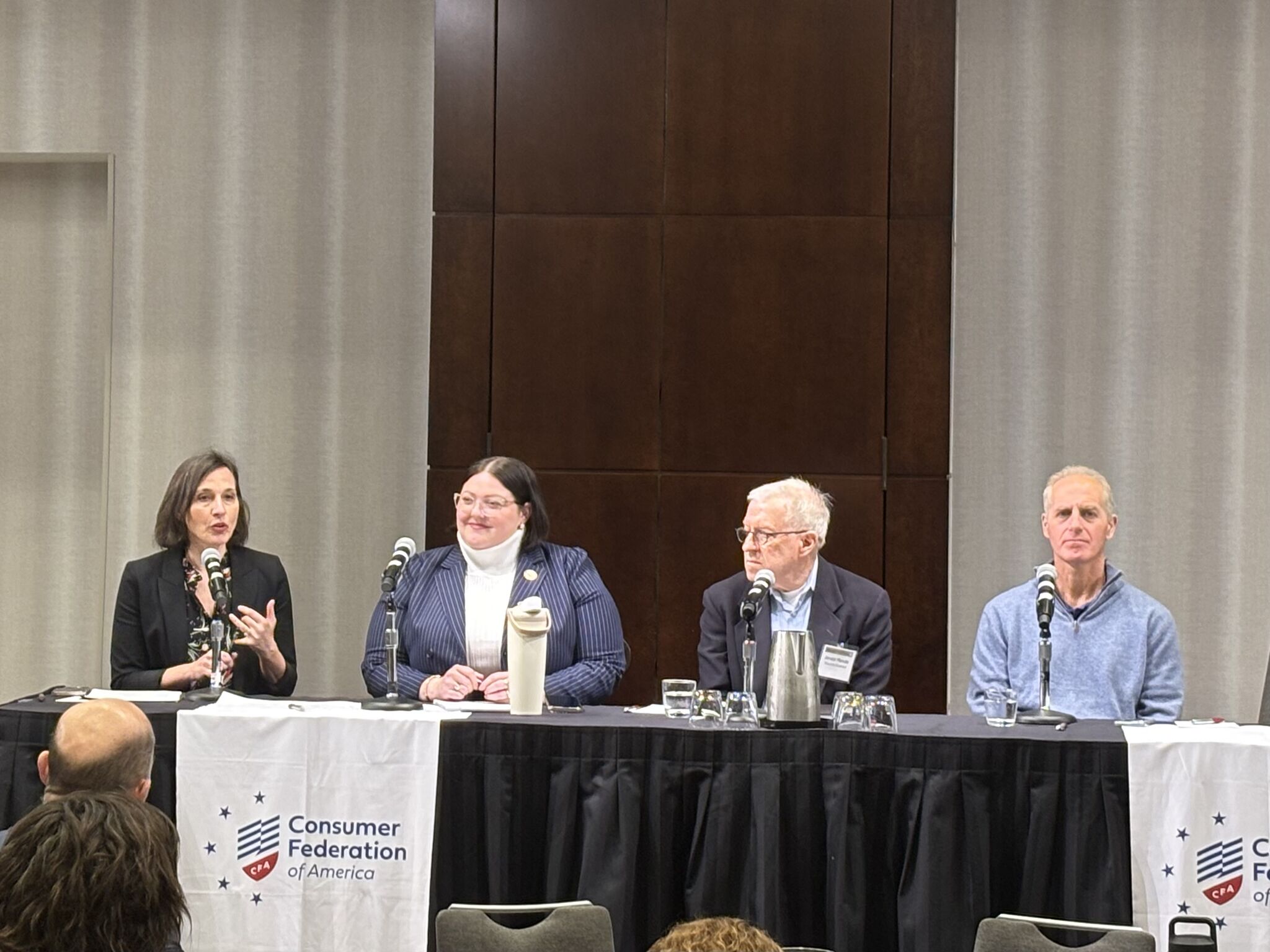
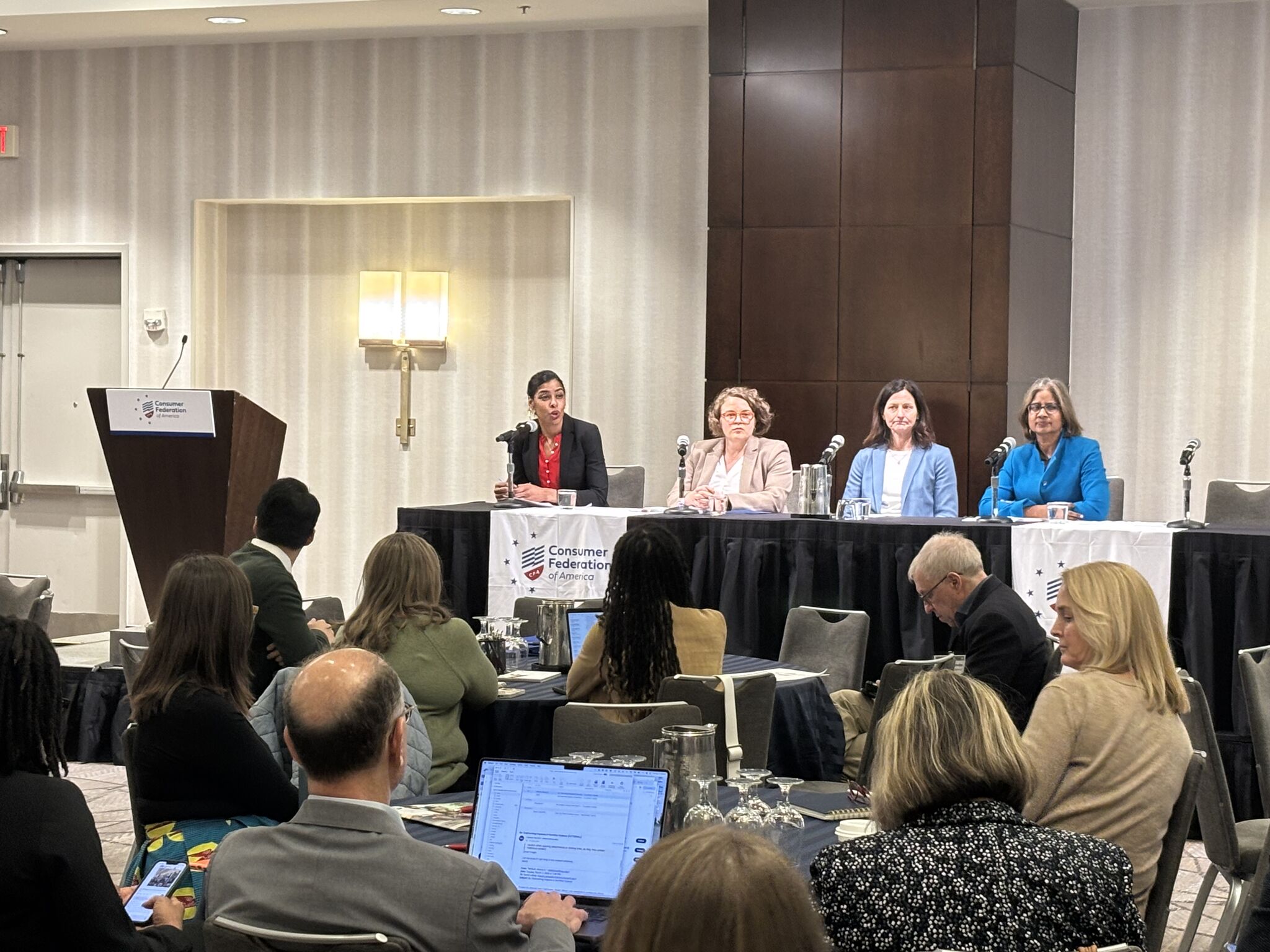
2026 NATIONAL FOOD POLICY CONFERENCE SPONSORS
Underwriters
Amazon
United Food and Commercial Workers International Union
Patrons
American Beverage Association
American Frozen Food Institute
Cargill, Inc.
Danone North America
FMI – The Food Industry Association
Sponsors
Academy of Nutrition and Dietetics
International Dairy Food Association
International Food Information Council
Mars, Inc.
NSF International
Watkinson Miller