Sign up to receive e-mail updates about conferences and events.
39th Annual Financial Services Conference
8:50 AM
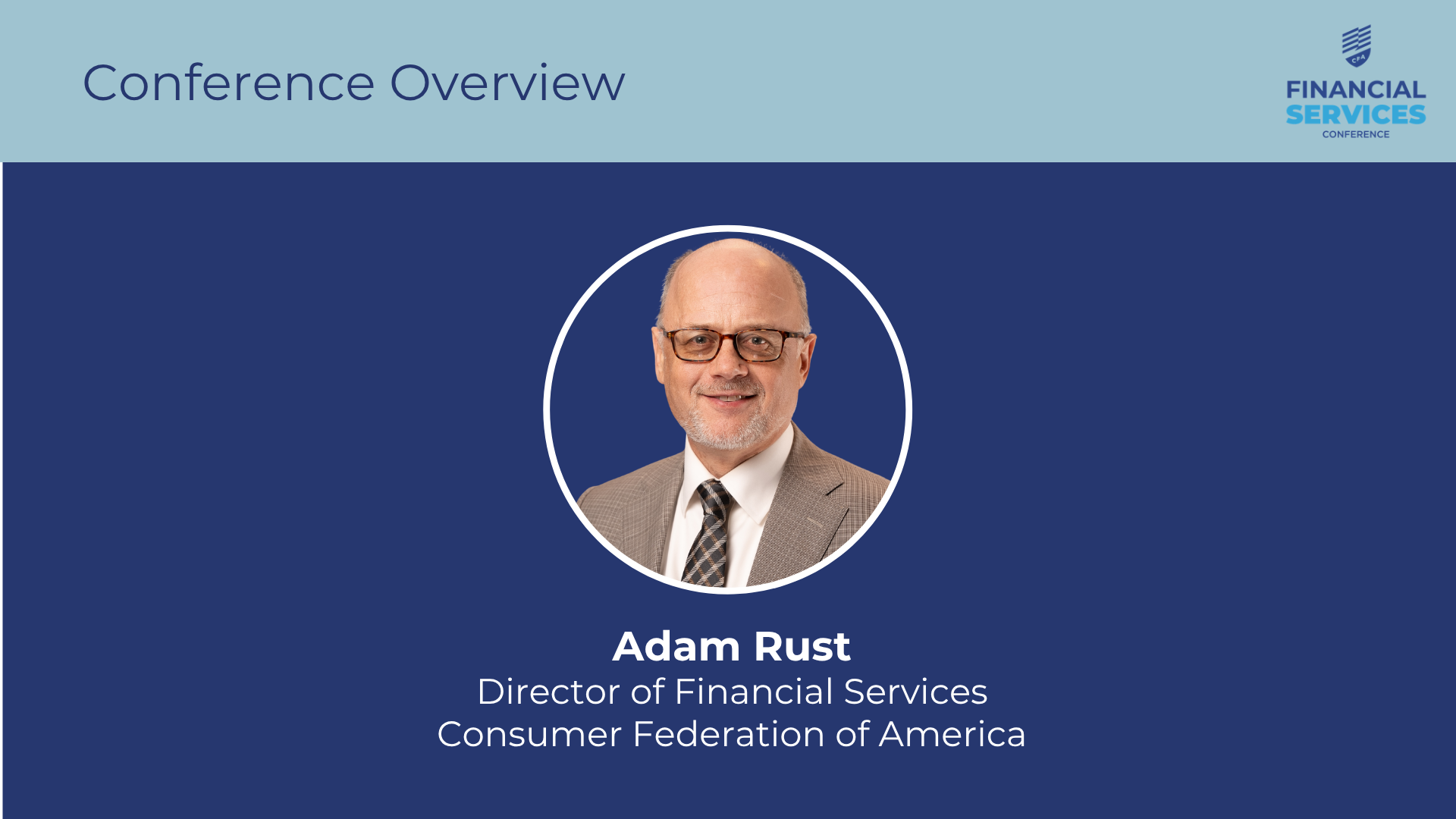
Conference Overview
Speaker
Adam Rust
Director of Financial Services
Consumer Federation of America
8:55 AM
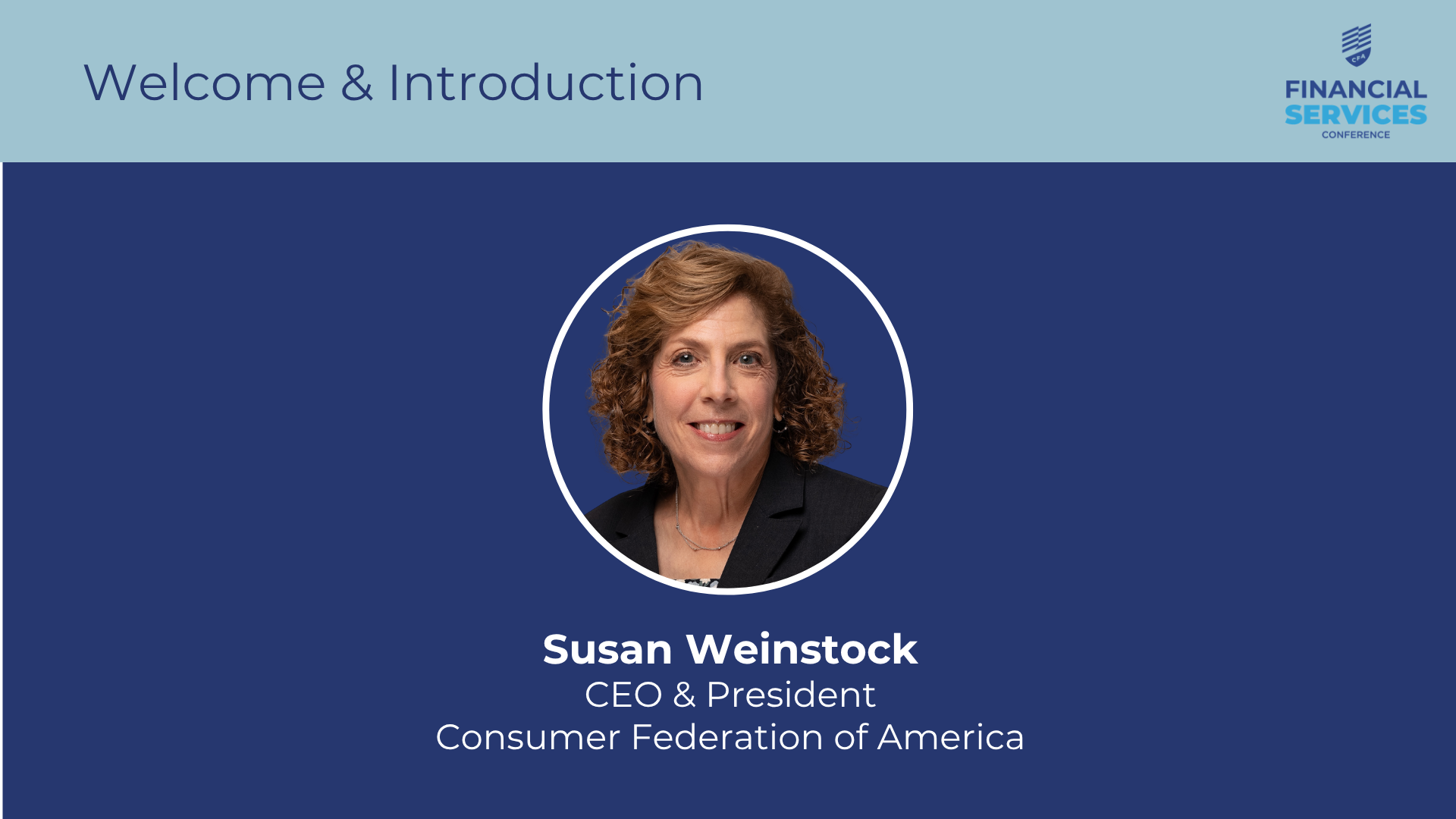
Welcome & Introduction
Speaker
Susan Weinstock
CEO
Consumer Federation of America
9:00 AM
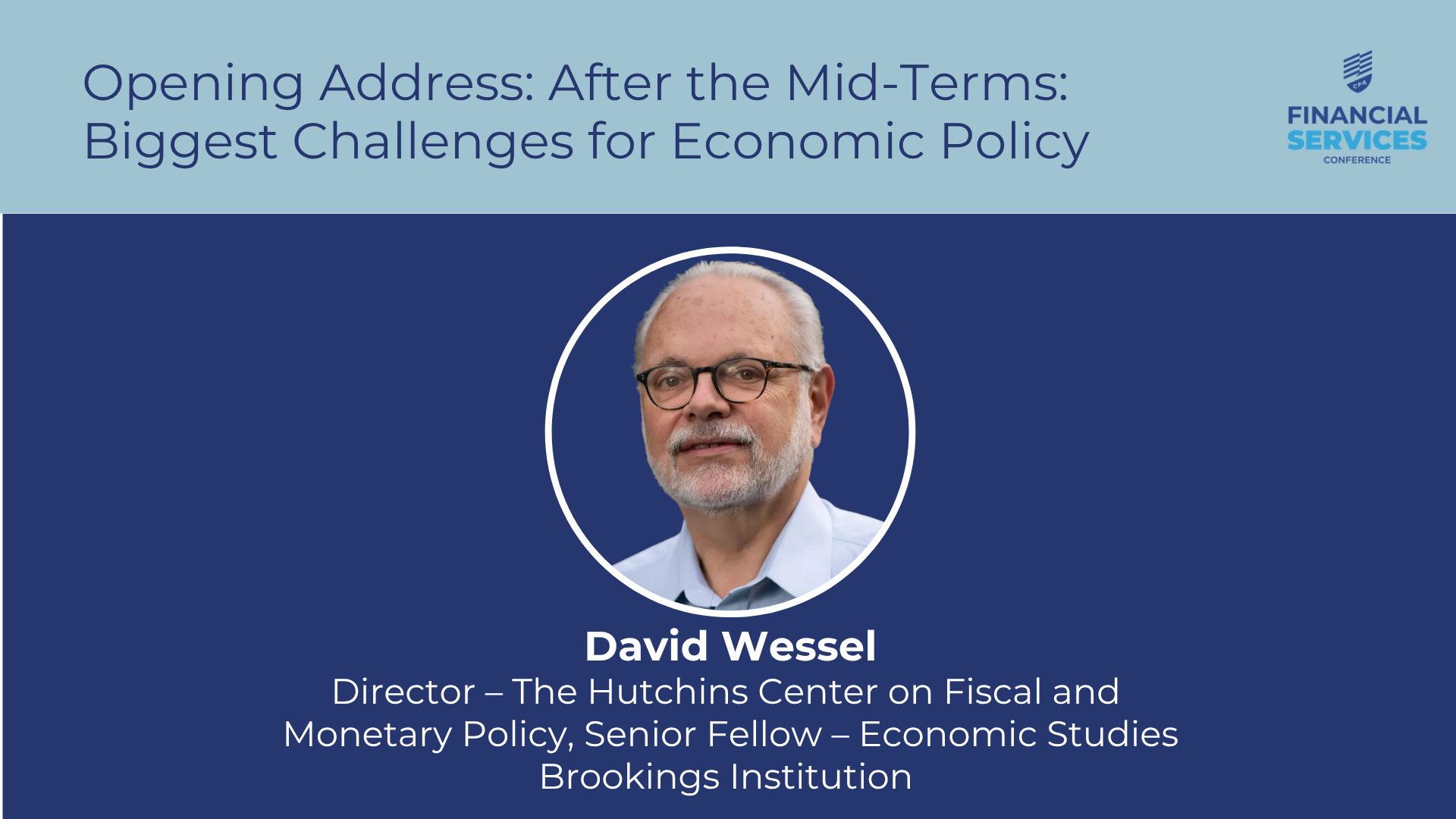
Opening Address: After the Mid-Terms: Biggest Challenges for Economic Policy
Speaker
David Wessel
Director – The Hutchins Center on Fiscal and Monetary Policy,
Senior Fellow – Economic Studies
Brookings Institution
9:30 AM
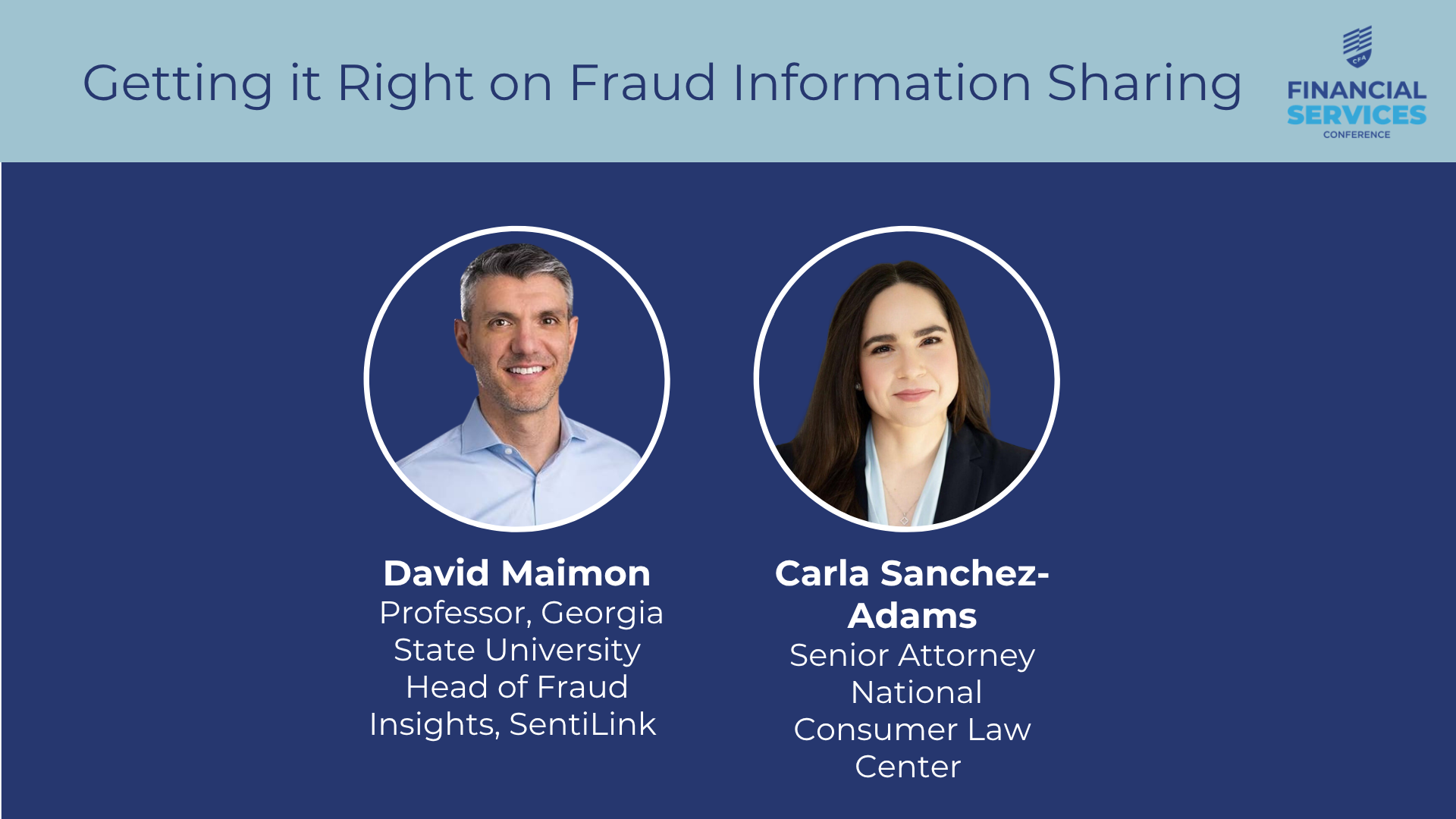
Getting it Right on Fraud Information Sharing
Each year, consumers lose tens of billions of dollars to scams, and sums lost continue to climb. This panel will explore the debate surrounding fraud information sharing. Calls for greater sharing exist because siloed data makes scams harder to prevent. After a scam has occurred, proprietary claims over data can undermine law enforcement efforts to find and punish criminals. But while aggregating information has shown promise, it also creates new risks. Information shared to prevent fraud can be repurposed in ways that run counter to consumers’ interests, and when screens make mistakes, the consequences can be far-reaching and hard to correct. This panel will delve into some of the tensions raised by the goal of effective information sharing.
10:30 am
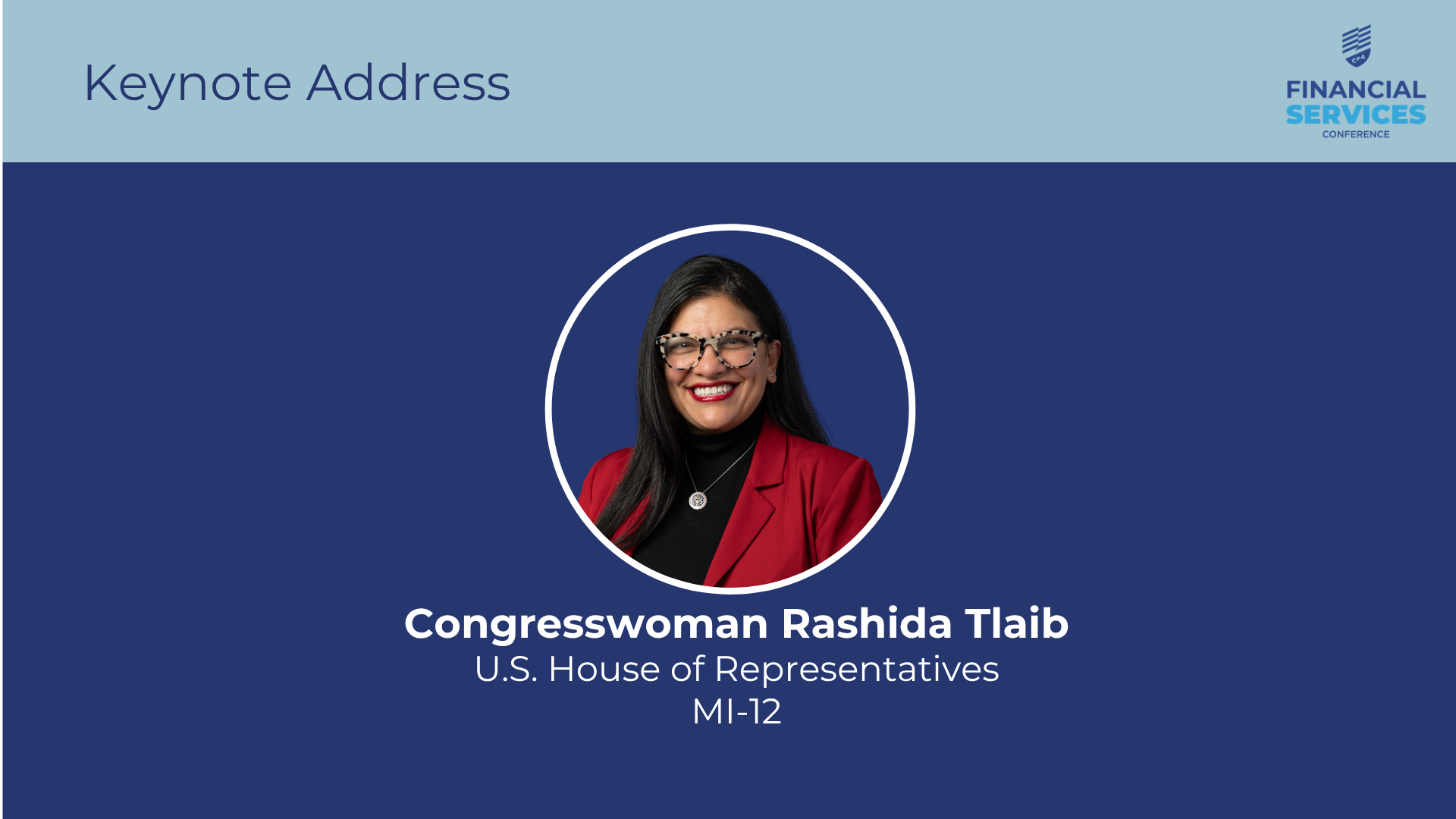
Keynote Address: Congresswoman Rashida Tlaib
11:00 AM
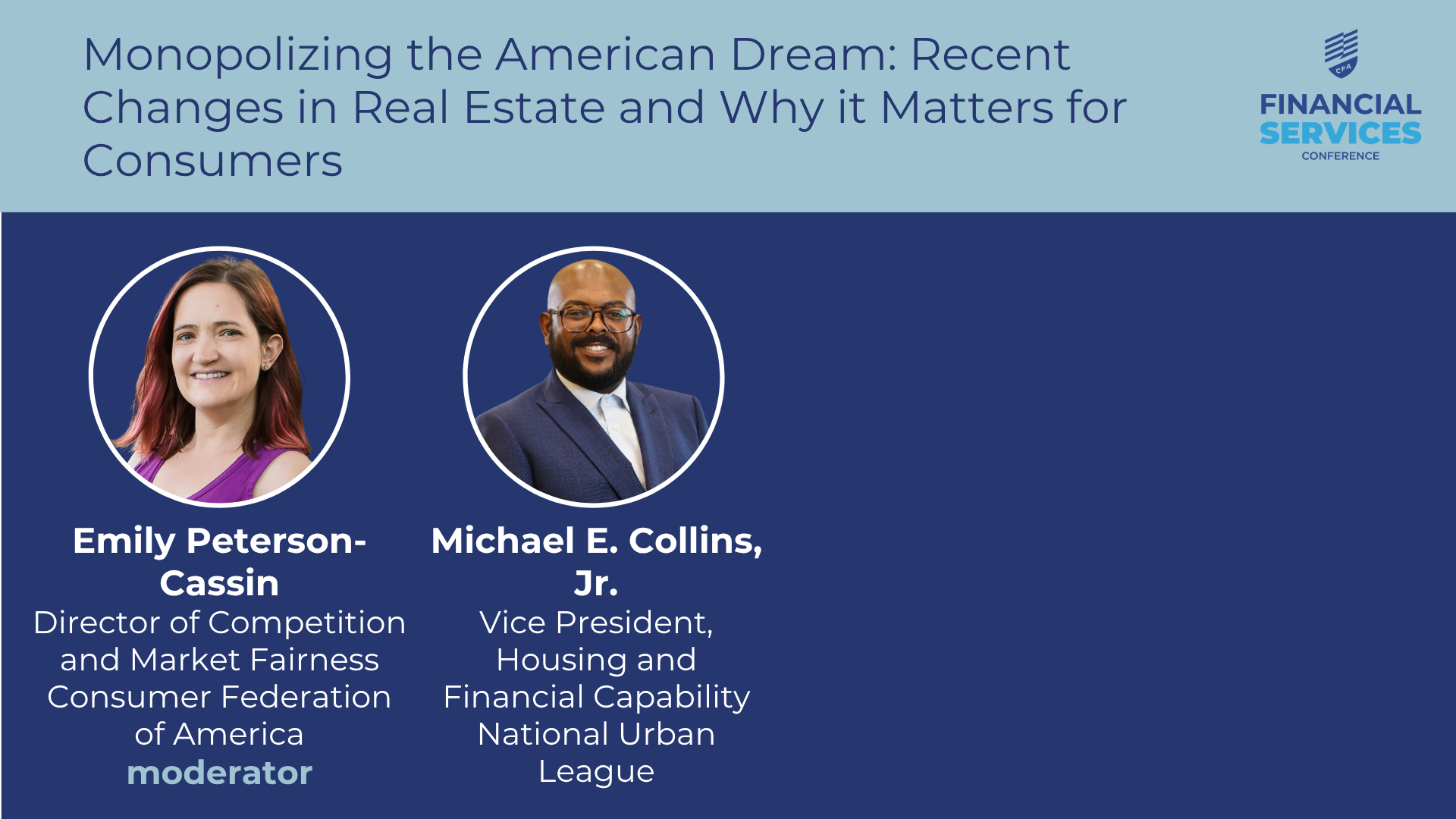
Monopolizing the American Dream: Recent Changes in Real Estate and Why it Matters for Consumers
Over the last few years, the rise of large FinTech companies has been disrupting how consumers find a mortgage, a home, and a real estate agent. Aided by the weak regulatory oversight of the current Administration, the world of real estate brokerages is seeing a surge in vertical integration, anti-competitive behavior, and the growing market power of a small number of tech companies. For example, CFA recently spoke out against the ways that brokerage firm Compass is aggressively pursuing market share by expanding its hold over “private listings,” where consumers only find out about new homes for sale if they work with a Compass real estate agent: a practice that reduces transparency and fair competition. This panel will lay out how the rise of FinTech – including fading lines between real estate brokerage and mortgage firms – is impacting consumers’ ability to fairly and affordably access the American Dream of homeownership. It will offer an introduction to recent changes, draw parallels to broader trends in market consolidation, and highlight important issues for consumer advocates to pay attention to in their local markets.
1:00 PM
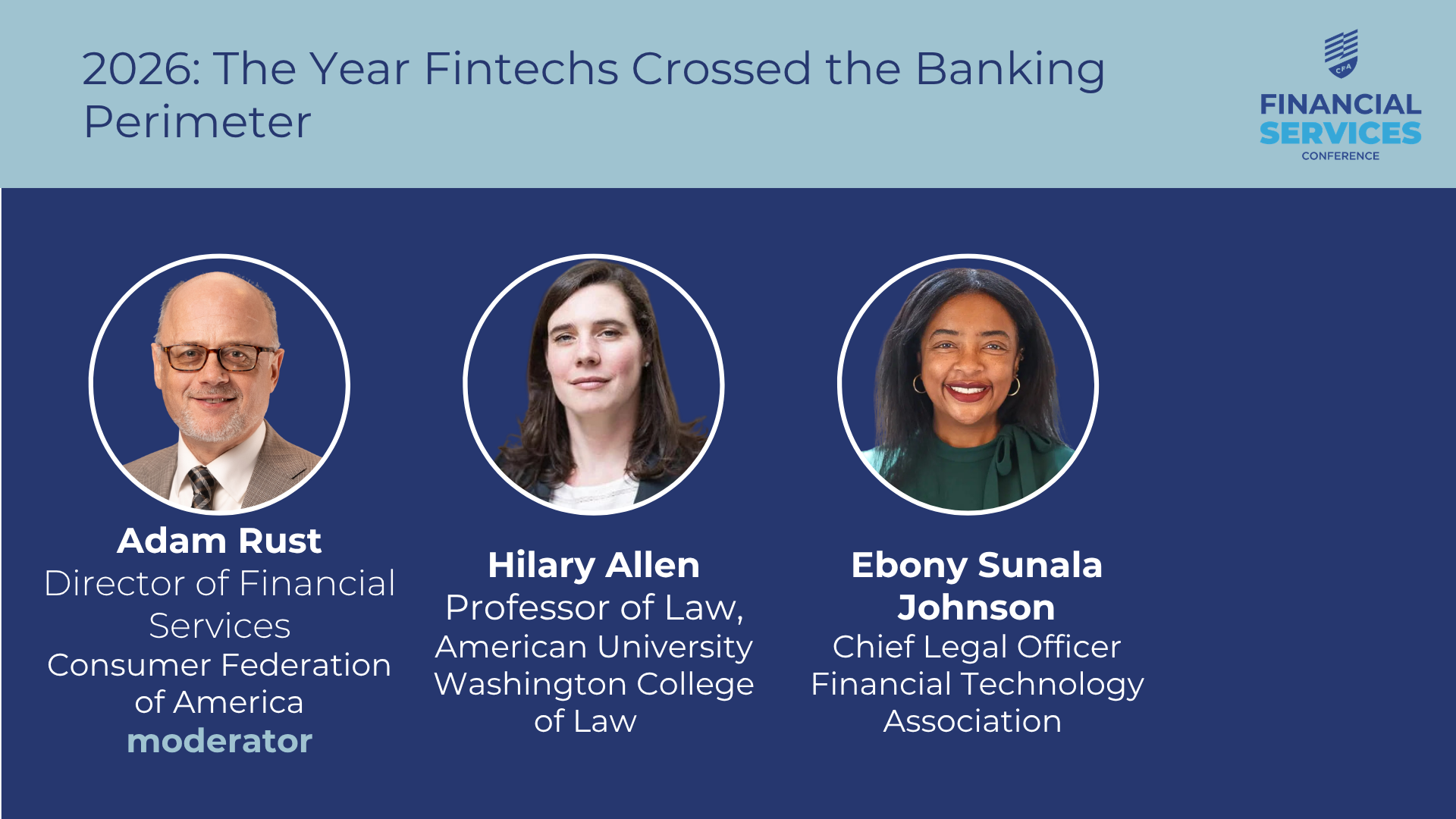
2026: The Year Fintechs Crossed the Banking Perimeter
In the wake of an Executive Order calling on prudential regulators to streamline regulation of fintechs, many fintechs have decided to move away from bank partnerships in favor of obtaining charters of their own. In the last year, over a dozen neobanks, buy now pay later lenders, and online installment lenders have sought to acquire existing banks or apply for new banking charters. Indeed, because charters confer substantial benefits, fintechs without them may be at a competitive disadvantage in the future. The prospect of so many fintechs entering the banking system raises fundamental questions for policymakers: on which side of the banking perimeter should these institutions sit, and under what conditions? This panel will explore the implications for consumer protection and financial stability.
2:00 PM
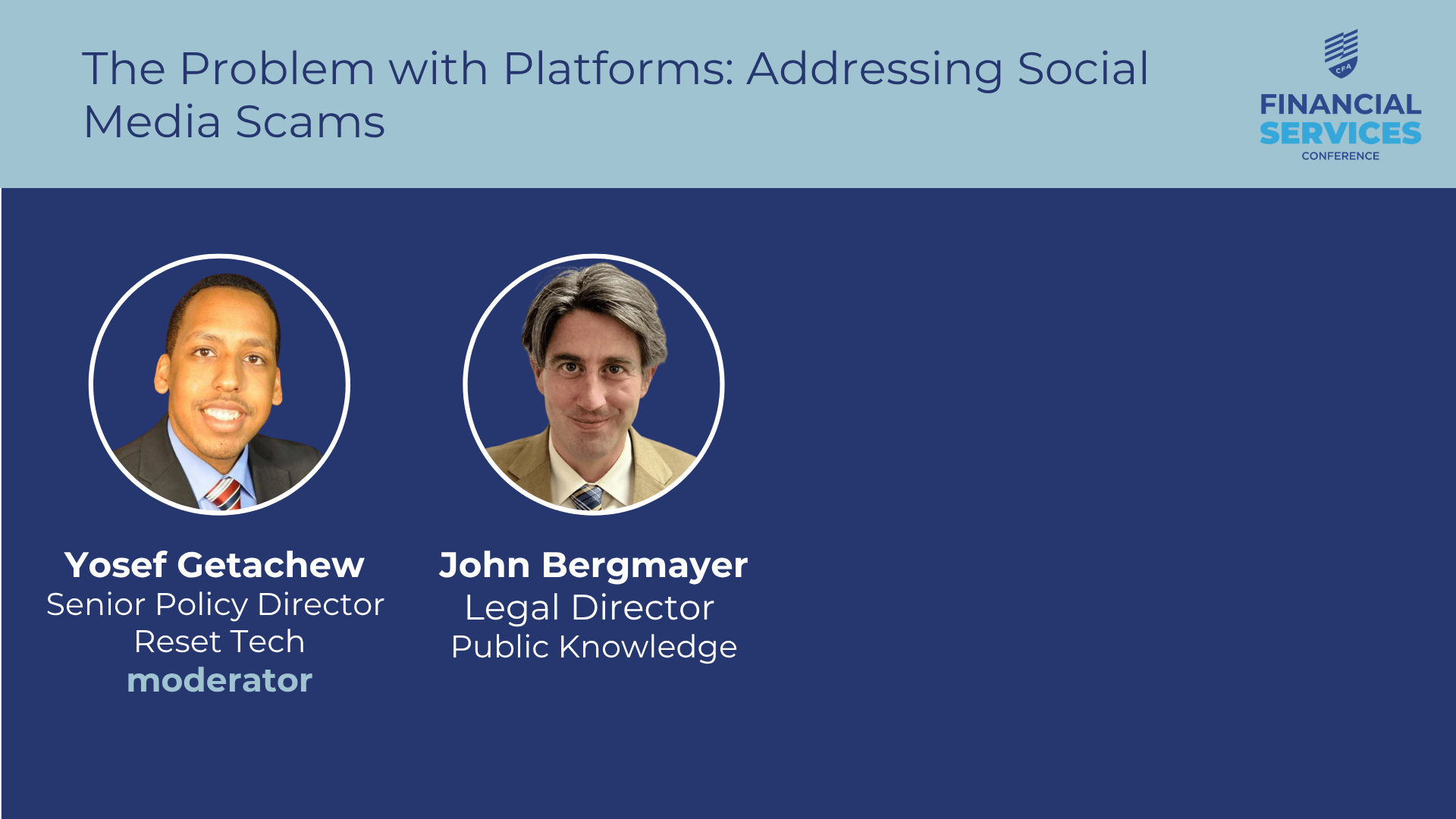
The Problem with Platforms: Addressing Social Media Scams
A substantial share of scams start when a criminal contacts the future victim through a social media platform. While the problems are broadly understood, efforts to fix problems encounter challenges involving free speech, privacy, liability, and technical capacity. Many of the challenges stem from Section 230 of the Telecommunications Act of 1996, which limits platforms' liability for content and activity on their websites and other arguments related to the First Amendment. This panel will briefly survey the key legislative proposals introduced at the state and federal level, including the SCAM act and SAFE Platforms Act and mostly focus on potential legal challenges to these types of bills.
3:15 PM
Heads They Win, Tails We Lose: How Private Equity is Hijacking Public Resources
The panel will examine how private equity and private credit take advantage of public subsidies like insurance guaranty funds, public pensions and the Federal Home Loan Banks to fund their risky activities.
4:15 PM
Holding the Purse Strings or Holding the Bag? Consumer Protection and Agentic Payments
Our internet privacy and consumer protection systems are built on knowing consent, but what if you’re not the one clicking “buy now?” Consumers are about to hand over household purchases, travel plans, and even financial decisions to AI agents, but what happens when the advice is bad, or the products they buy are faulty? This panel will bring together consumer advocates, enforcers, and experts to examine whether the liability structures are sufficient for what’s coming… and what to put in their place if they’re not.
5:15 PM
America Saves 25th Anniversary Celebration
8:30 AM
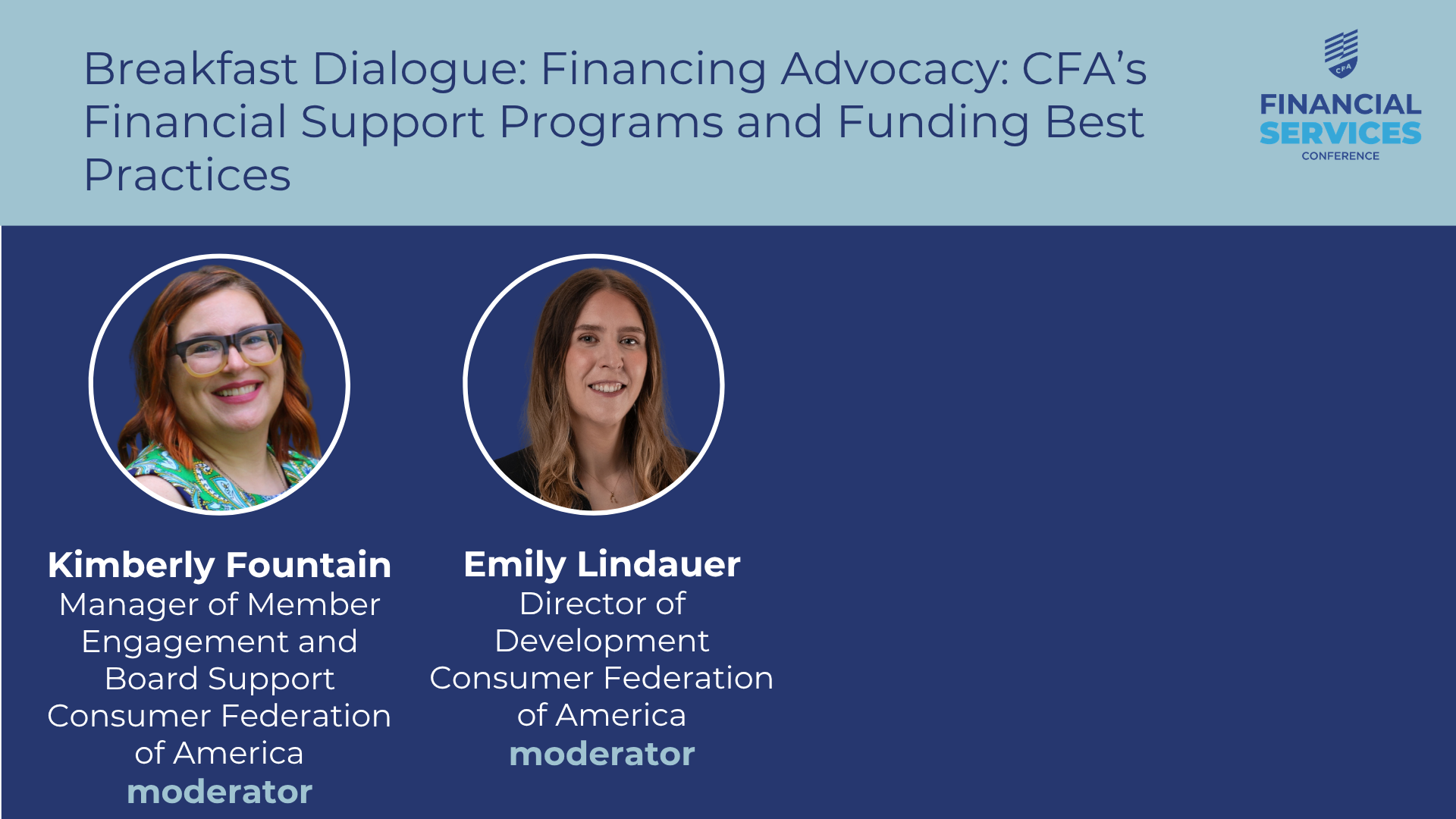
Breakfast Dialogue: Financing Advocacy: CFA’s Financial Support Programs and Funding Best Practices
In the current financial landscape, keeping a non-profit’s advocacy work solvent can feel daunting. This session brings together 2026 awardees of CFA’s financial support programs and CFA staff to explore the ins and outs of CFA’s General Operations Support and Urgent Opportunities Support Programs, how to apply for 2027’s programs, along with tips and best practices for securing funds for your advocacy work.
9:30 AM
Welcome
Speaker
Susan Weinstock
CEO
Consumer Federation of America
10:00 AM
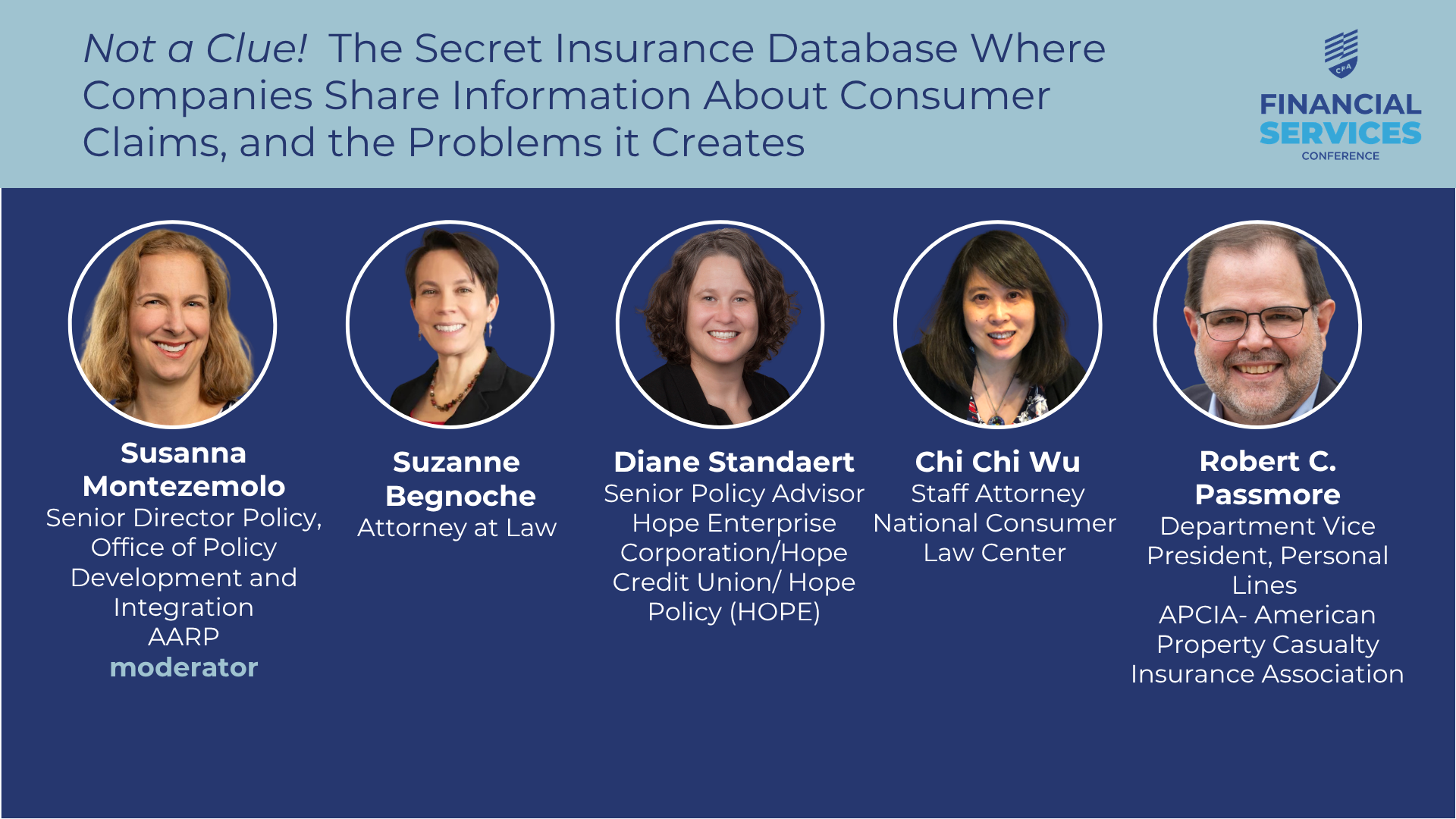
Not a Clue! The Secret Insurance Database Where Companies Share Information About Consumer Claims, and the Problems it Creates
This panel will discuss insurers’ use of the Comprehensive Loss Underwriting Exchange, known as CLUE, and another similar consumer reporting database. Unlike the more widely known credit history consumer reports, the claims history reports have received far less scrutiny or accountability for errors and unfair uses. The panel will assess the impact of consumers’ CLUE reports on the cost of and access to auto and homeowners insurance policies in America and discuss new research by the National Consumer Law Center. Panelists will consider consumer protection standards that state federal policymakers could consider to address the widespread use of these databases and the problems that stem from them.
11:15 AM
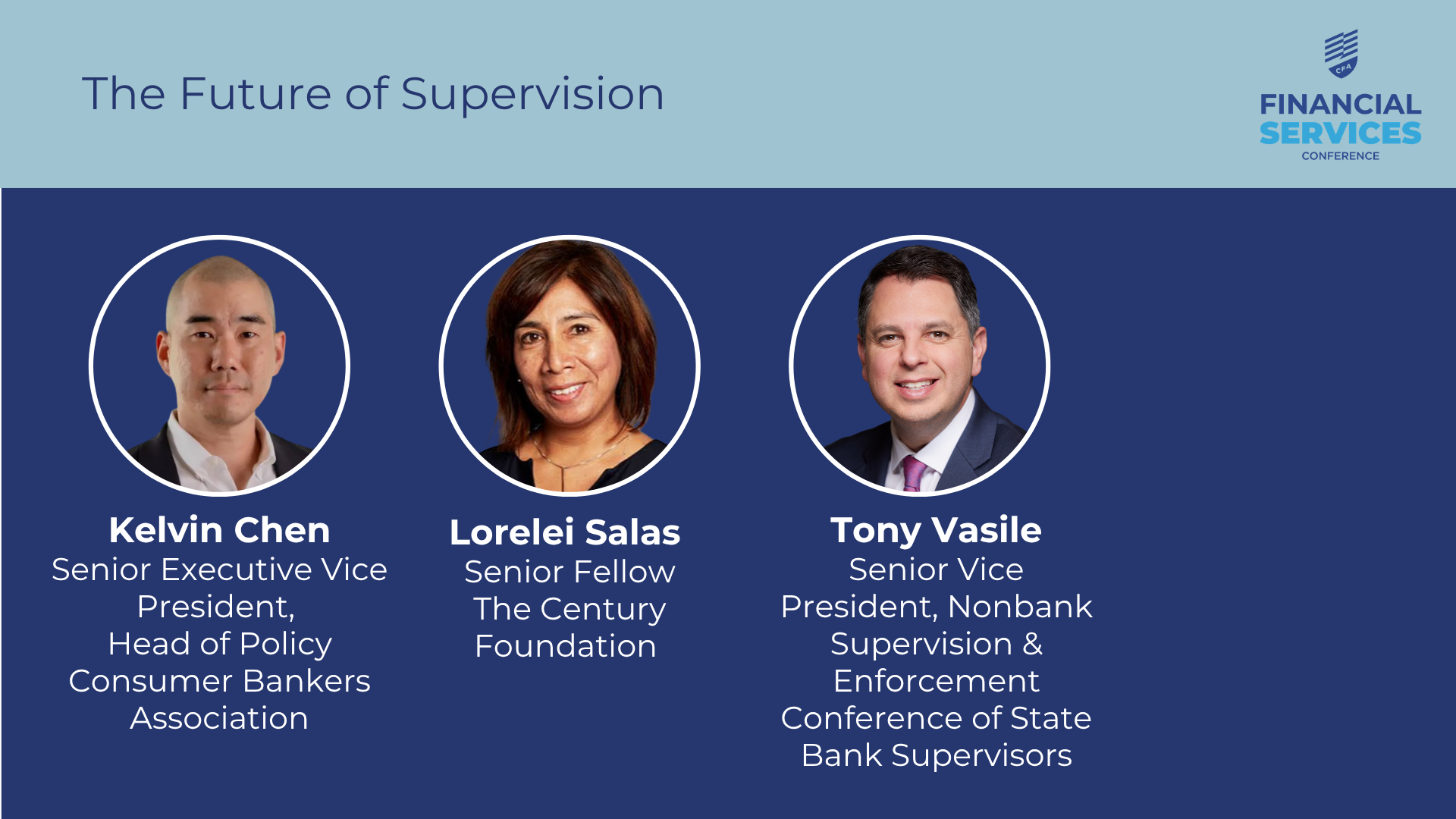
The Future of Supervision
When Congress created the CFPB after the financial crisis, it gave the agency supervisory authority over large banks and credit unions, nonbanks in specified markets, and other large participants in certain areas. Upon assuming control of the agency in February 2025, CFPB Acting Director Russell Vought ordered its supervisory staff to suspend their work. Subsequently, Vought announced new policies that deprioritized much of the work Congress assigned to the agency. As a result, an authority historically exercised outside the public’s view has become a focal point for policy debates. Meanwhile, state financial regulators have stepped in to fill gaps when possible. Policymakers have proposed strongly contrasting visions for the agency’s supervisory work. In this panel, speakers will explore the consequences of these changes and their priorities for future supervisory work.
AARP
American Bankers Association
American Express Company
Americans for Financial Reform
Bank of America
Broadridge Financial Solutions, Inc.
CFP Board
Chase
Citi
Consumer Bankers Association
Early Warning
FICO
Independent Community Bankers of America
National Consumer Law Center
Texas Appleseed
TruStage
Walmart
Wells Fargo
Zillow Group
A special thank you to Huntington National Bank, TruStage, America's Credit Unions, and Pennymac for their generous support of the conference